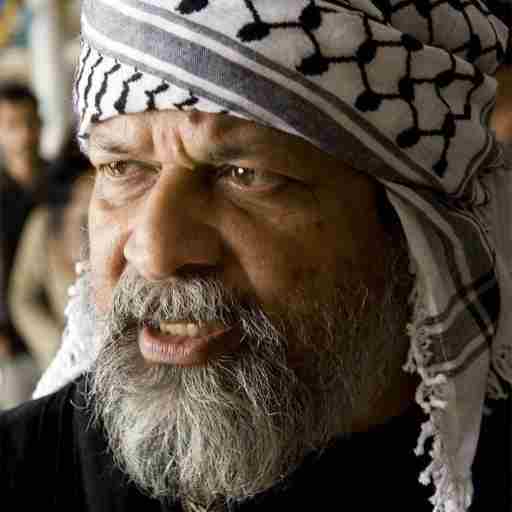

The Homeland Security Bureau of the Miami-Dade Police Department has published a “Terrorist Awareness Guide” where it advises citizens to be on the lookout for people taking “inappropriate photographs or videos.”
And no, they are not talking about perverts shooting up the skirts of women.
They’re talking about people taking photographs of surveillance cameras and other things that are plainly visible to the naked eye.
Here is an excerpt of what the pamphlet says:
Maybe you are at a National Monument and you
notice a person nearby taking a lot of photos. Not
unusual. But then you notice that he is only taking
photos of t he surveillance cameras, crash barriers at
the entrances, and access control procedures. Is that
normal for a tourist? Absolute not!
The following should cause a heightened sense of
concern:
• Unusual interest
• Surveillance
• Inappropriate photographs or videos
• Note-taking
• Drawing of diagrams
• Annotating maps
• Using binoculars or night vision devices
It should be noted that Detective Bustamante of the same homeland security bureau was one of the officers who responded to our first Metrorail incident where we were “permanently banned” for taking photos.
Bustamante proved pretty clueless of the law when he informed us we needed a permit to photograph anything within the Metrorail, regardless if we were shooting commercial or not.
Read the entire document below. The portion on photography is on the second page in the right-hand column circled in red.
“The average person believes implicitly that the photograph cannot falsify. Of course, you and I know that this unbounded faith in the integrity of the photograph is often rudely shaken, for, while photographs may not lie, liars may photograph.”
Lewis Hine 1909
Photographers often get defensive when reminded that many of them resort to ‘digital manipulation’ using the new tools currently available. Discussions about the limits of what is permissible regularly sparks off heated debates, particularly in contests. Jobs have been lost, awards cancelled, and credibility undermined when photographers have digitally manipulated photographs to create the image they have wanted.
Sadly, the arguments raised have largely dealt with issues of technique rather than issues of ethics. One school of thought suggests, ‘if it was doable in a darkroom, then it can be doable in a computer’. Others claim that conventional darkroom techniques, such as dodging, burning, or changing contrast are acceptable, but inserting, taking away, or displacing visual elements are off limits (though these too were, and had been, done in the darkroom). More ‘artistic’ criteria suggest that the essential ‘mood and character’ of the original image must be preserved. None of this addresses the central issue Hine had brought up in 1909. Is the photographer lying?
I believe the discussion needs to shift from ‘how’ the image was altered to ‘why’ it was altered. Indeed, photographers have ‘enhanced’ their images by using filters to darken skies, dodged and burned in the darkroom to change relative emphasis of visual elements, sometimes even eliminated visuals that distracted from what was considered central to the photograph. Subtle changes in tonality and gradation altered the ‘feel’ of an image, affecting the emotional response one might have to the visual experience. In the analogue days, the skill sets required hand-eye coordination to a far greater extent than is needed today. The modern photographer needs to learn about pixels, paths and plug-ins. The software used, the amount of RAM and processor speed are the new vocabulary that replaces darkroom tools of yore. But even in the digital age, the skill of the practitioner often determines whether the change is detectable.
There are those who subvert the process and deliberately play on detectability of the process, confronting the viewer with their interventions, questioning her perception of what is acceptable, stretching her boundaries of credibility. Indeed, on occasions, flaunting these very norms to raise uncomfortable issues of how images are read. Early theorists like Professor Fred Ritchin, currently at Tisch School of The Arts, New York University, have eloquently analysed how this ‘manipulation’, instead of undermining the credibility of the photograph, has returned the onus of authenticity upon the integrity of the author rather than the acceptability of the tools (human or mechanical). One believes a photograph, as one believes a word, based on the reliability of the source, rather than the mode of production. The hugely talented pioneer of digital photography, the Mexican photographer Pedro Meyer, playfully, intelligently and skillfully, toyed with us, shaking the pillars of our age old beliefs, forcing us to question the process of seeing and believing.
Of course the photograph still retains the characteristic of being the primary source. “I was there. I saw it with my own eyes. I have photographs.” It is precisely because the photograph or the video, is seen as an unmoderated fact, that it is so powerful. It is precisely the reason why lying through a video or photograph can be so effective.
In this age of spin, rhetoric and hyperbole, does the liar, by shaking our confidence in the medium, undermine the veracity of the one source that we still implicitly trust? In some ways of course it does, but by doing so, the liar does us a favour. It reminds us to question, not merely the medium but also the source.
Buddha, Moses, Jesus and Mohammed were believed because they were trustworthy. They had established their credibility. They had a track record that gave their word a respectability that others who said otherwise did not have. I have no way to vouch for the veracity of the incredible claims that they made. That is the basis of a very different discussion. But it is undeniably true that centuries after they have gone, there are people who live by their ideals and are prepared to die for them. The lives that they lived, made their words believable. We believed their actions, which led to us believing their words.
That brings me to the point of this article. The video of the attack on the flotilla. People have correctly pointed to the technical errors in the released videos. The fact that there were white frames inside the sequence, that consecutive frames did not match, that crude alterations revealed the manipulation where people are seen to be walking through metal pylons, the amateurish display of a catapult by turning towards a camera on a tripod and holding it high, in the middle of an attack by armed soldiers, the fact that a voice inserted in the video is that of a woman on another ship, all make the video a laughable piece of ‘evidence’. Indeed, the detection of the tampering is what is being used as evidence of lies being told.
My argument is elsewhere. What if the Israelis had produced the perfect video, backing up their claims. What if their technicians had been more skilled, their computer animations more realistic, their actors more adept and telling their version of the story. Would that have validated their version of the story? I would like to return to who is telling the story. The veracity of the source.
Lies are more difficult to protect than the truth. If the version they had presented had been genuine, there would have been no need to confiscate all the visual material, releasing selective segments, with obvious tampering. If they had nothing to hide there would have been no need to jam the communications at the moment of attack, or to erase the audio from certain segments of the video. There would have been no reluctance to make all the evidence available and let the viewers decide. Suspicious behavior gives rise to suspicion. For a nation known for manipulating the truth at all levels, casting doubts on authentic data, vilifying honest citizens, persecuting every hint of dissent, it is the fact that the source is Israel that is the greatest reason for disbelief.
If a time were to come when Israel had a change of heart and for once spoke the truth, like Matilda in her burning house, there would be none to believe her. That fire is imminent and Israel’s house of lies might well be close to burning.
Adopted by a recorded vote of 32 to 3, with 9 abstentions.
The voting was as follows:
In favour: Angola, Argentina, Bahrain, Bangladesh, Bolivia, Bosnia and Herzegovina, Brazil, Chile, China, Cuba, Djibouti, Egypt, Gabon, Ghana, India, Indonesia, Jordan, Kyrgyzstan, Mauritius, Mexico, Nicaragua, Nigeria, Norway, Pakistan, Philippines, Qatar, Russian Federation, Saudia Arabia, Senegal, Slovenia, South Africa, Uruguay;
Against: Italy, Netherlands, United States of America;
Abstaining: Belgium, Burkina Faso, France, Hungary, Japan, Republic of Korea, Slovakia, Ukraine, United Kingdom of Great Britain and Northern Ireland:
It’s not just an Israeli government initiative. Operation Make The World Hate Us has another valuable asset — the Deputy Managing Editor of the Jerusalem Post Caroline Glick, who under the auspices of the US-based Center for Security Policy has just released one of the most gratuitously offensive (and on so many levels, it’s quite remarkable) video creations to afflict the year 2010, ‘We Con the World,’ which appears to mock the nine dead (or more — six are still reported as missing) activists killed on the Turkish Mavi Marmara when Israeli Defense Force commandos stormed the boat. According to a British eyewitness interviewed by UK-based The Press Association, 48 people aboard the ship received gunshot wounds.
Two notable organizational patrons of Glick’s video are the Center for Security Policy and Christians United for Israel. Glick’s industrial-strength polemics include claims that there is a ‘totalitarian jihadist ideology which is ascendant throughout the Islamic world.’ According to the Jewish organization Jews on First, Glick has advocated the unilateral bombing of Iran.
The Center for Security Policy is so proud of Glick’s video it’s up on the organization’s web site front page. Christians United for Israel website also has a front page link to Glick’s inadvertent anti-hasbara masterpiece. The video features, among other lyric elements, the line ‘Itbach el Yahud!’ (slaughter the Jews!) and claims that children in the Gaza Strip lack ‘cheese and missiles’ (according to a 2009 UN survey 65% of babies 9-12 months old in Gaza suffer from anemia).
It’s not especially surprising that Caroline Glick was inclined to produce ‘We Con the World’ given that in 1997 and 1998 she served as assistant foreign policy adviser to Benjamin Netanyahu. What’s astounding is Glick’s obvious pride in associating herself with the video, which features shaky production values, procession of anti-Islamic stereotypes, bad singing, and mockery of the dead. Not only has Glick posted it on her personal website but she acted in the video, which at the end identifies her as Deputy Managing Editor of the Jerusalem Post.
As Caroline Glick Wrote on her blog post concerning her video,
This week at Latma — the Hebrew-language media satire website I edit, we decided to do something new. We produced a clip in English. There we feature the Turkish-Hamas ‘love boat’ captain, crew and passengers in a musical explanation of how they con the world.
We think this is an important Israeli contribution to the discussion of recent events and we hope you distribute it far and wide.
All the best,
Caroline
As described in her Wikipedia bio, Glick’s ‘writings have appeared in The Wall Street Journal, the National Review, The Boston Globe, the Chicago Sun-Times, The Washington Times, Maariv and major Jewish newspapers worldwide’ and she’s been on ‘MSNBC, Fox News Channel, Sky News, the Christian Broadcasting Network, and all of Israel’s major television networks. She also makes frequent radio appearances both in the US and Israel.’
And in her spare time, Glicks’s a video auteur.
Lyrics to ‘We Con The World’
There comes a time
when we need to make a show
for the world, the web and CNN
There’s no people dying
so the best that we can do
is create the greatest bluff of all
We must go on, pretending day by day
that in Gaza there’s crisis, hunger and plague
coz the billion bucks in aid won’t buy their basic needs
like some cheese and missiles for the kids.
We’ll make the world abandon reason
we’ll make them all believe
that the Hamas is Momma Theresa
We are peaceful travelers
with guns and our own knives
the truth will never find its way to your TV
Ooooh we’ll stab them at heart
they are soldiers no one cares
we are small and we took some pictures with doves
As Allah has shown us
for facts there’s no demand
so we will always gain the upper hand
We’ll make the world abandon reason
we’ll make them all believe
that the Hamas is Momma Theresa
We are peaceful travelers
we’re waving our own knives
the truth will never find its way to your TV
If Islam and terror brighten up your mood
but you worry that it may not look so good
Well don’t you realize you just gotta call yourself
an activist for peace and human aid
We’ll make the world abandon reason
we’ll make them all believe
that the Hamas is Momma Theresa
We are peaceful travelers
we’re waving our own knives
the truth will never find its way to your TV
We con the world
yallah, let me hear you!
we con the people
We’ll make them all believe the IDF is Jack the Ripper
We are peaceful travelers
we’re waving our own knives
the truth will never find its way to your TV
Itbach el Yahud ! (slaughter the Jews)
We con the world
we con the people
We’ll make them all believe the IDF is Jack the Ripper
All together now!
We are peaceful travelers
we’re waving our own knives
the truth will never find its way to your TV
We con the world
yallah, let me hear you!
we con the people
We’ll make them all believe the IDF is Jack the Ripper
We are peaceful travelers
we’re waving our own knives
the truth will never find its way to your TV
This article was first published in the AlterNet blog on 4 June 2010; it is reproduced here for non-profit educational purposes. According to Ayman Mohyeldin, this video was — ”inadvertently” — ‘distributed [to journalists] on Friday by the Israeli government press office (which belongs to the Israeli prime minister’s office and is responsible for accrediting foreign journalists)’ (emphasis added, ‘Israeli Government’s Media Madness,’ The Middle East Blog, Al Jazeera, 4 June 2010).
Any news? I had asked the intermediary, after the fall of Kilinochchi. “I fear the worst” was the short reply.
We had never met. It was always through the intermediary that she approached me. Image files encrypted layers deep in ‘less likely to be searched’ laptops were passed on. Endless conversations about her, without her ever being present. Photographs, letters, and at a later stage films, are all that remain with me.
Theepa* was a commander in the LTTE. I knew her as a photographer. In a letter to me, translated by the intermediary, she had written. “Even after an artist’s death art lives. After death it will be so. I have that small belief.” She took photographs of conflict, of death, but there were also those tender moments, of women doing each other’s hair in the bunker. Footsteps in the sand, idyllic sunsets. This was a part of Kilinochchi daily life I had never seen.
There are those who mourn for Prabhakaran. Those who gloat at his death. Leaders are vilified, deified, mummified, bought, sold, traded. But they are the ones remembered. The foot soldiers, who have less to gain and far more to lose, are oft forgotten. She lived an extra ordinary life in the hope her people could live ordinary ones.
The ‘Big Boss’ knew the value of having a good photographer. So when her intermediary sent me this message “She told me last night that the ‘Big Boss’ here is very happy with the way things are unfolding for her concerning the magazine articles and Chobi Mela etc. etc.He has just bought her a Canon D1 Mark II as a gift and is willing to set her ‘free’ in January 2008,” I was elated.
She had submitted work for Chobi Mela IV. We had hung the work at Shilpakala Academy, the academy of fine and performing arts. Later it showed in the Brussels Biennial. I had sent her photo magazines, the Drik brochure and the Chobi Mela IV catalogue. Big boss had requested an extra one for himself. Her photography was changing, she was having a go at ‘art photography’ dabbling in film. Some of the films she sent were very well made. It was in the genre of the early German and Russian propaganda films. Her’s were in colour with well mixed music, smooth tracking and fast cuts. I pondered on the propaganda, but delighted in her new skills. And then the communication stopped. Things had changed by January 2008.
In her writing I appeared as an elder brother, a teacher. anna and aasiriyar. She was my little sister thangai. While she appreciated me helping her with her photography, it was my refusal to pre-judge her that formed the basis of our bonding. As I wrote about her to Rahnuma, my partner, I realised I was weeping. Tears for a little sister I had never met. Fondness for a student I had never encountered. Rahnuma too shed tears at the other end of the chat line. She had only known her thangai through me. This unseen, unknown, untouched little sister who had entered our lives. I had nominated her for awards where she had been turned down because she was a terrorist. I remember how in 1971, when that word had not yet become fashionable, the Pakistani media called us ‘miscreants’.
She longed to see me, but warned me against going to Kilinochchi. It was too dangerous. I remembered another Sri Lankan girl, another thangai, whom I’d met after the tsunami. Shanika had lost her mother and her three sisters to the sea, and warned me to stay away from the water. Theepa remembered a mob killing six of her family in 1983. Kilinochchi was the sea, she wanted to shield me from. I the anna, remember my two little thangais, one Sinhalese, one Tamil, who both wanted to shelter me from harm.
She was a fighter who had wanted to be an artist. A worker who wanted to be a poet. She was prepared to die, but longed to live.
She, like so many others who have been oppressed, will forever yearn for freedom. Until another’s prosperity gives one joy; until another’s sorrow gives one pain; until the betterment of another becomes one’s concern; until one is liberated by another’s freedom; victory over another, will be a defeat for oneself.
I talk of her in the past, but against my better judgement, I believe she may be alive. Perhaps in a rehabilitation camp with other fighters. In her letter she had said, “I hope that if our liberation war lets me live then I would love to meet you.”
Wherever she may be, I know we will meet. Together we’ll explore photography.
In about a week, InshAllah, I will be traveling to Pakistan. My ticket is booked; visa arrived this morning; shalwar kameezes are at the dry cleaners.
It’s not the ideal time to be going to Pakistan. A recent report by the Atlantic Council said Pakistan “is on a rapid trajectory toward becoming a failing or failed state.” A New York Times editorial last week put it this way: “Almost no one wants to say it out loud. But between the threats from extremists, an unraveling economy, battling civilian leaders and tensions with its nuclear rival India, Pakistan is edging ever closer to the abyss.”
The abyss grew depressingly deeper this week, when the Sri Lankan cricket team was attacked in a commando-style ambush, leaving eight people dead and several players wounded. Twelve gunmen — carrying sacks of ammunition — attacked the team’s bus in broad daylight — in the heart of Lahore — and then escaped in motorized rickshaws. What??
The terrorists knew what they were doing: attack the nation’s most cherished pastime — it’s symbol of camaraderie and goodwill — and you attack the heart and soul of the country and instill maximum fear.
So, why exactly am I going to Pakistan when relatives there and here are counseling not to, and those who can are leaving?
It’s to witness the work of two men – one a Pakistani, the other an American – who are tirelessly, quietly, and with humility working to improve the lives of Pakistanis so the desperation and hopelessness at the root of the current chaos, one day, diminishes.
An AP photograph in the NYT shows those who died in the Lahore massacre lying on stretchers covered with blood-stained white sheets with four letters printed on them: EDHI.
Edhi is hardly known in the United States, but to Pakistanis around the world he is a true hero. In the past 60 years, he’s created one of the largest and most successful health and welfare networks in Asia. He started off begging for donations. Today, he runs a nationwide organization of ambulances, clinics, orphanages, homes for the physically handicapped, blood banks, mortuaries, and much more. Edhi, and his wife of nearly 45 years Bilquis, live in a small two bedroom apartment next to his office in one of the clinics. He accepts no salary. He’s on call 24 hours a day. Their wedding night is indicative of how they spend their days: Edhi and Bilquis rushed a 12-year old girl with major head injuries to the hospital and supervised blood transfusions throughout the night. His vision of charity is at the heart of Islam. Why don’t we hear about it?
Many know of Greg Mortenson’s inspiring story through his best-selling book “Three Cups of Tea”. He is receiving the Sitara-e-Pakistan, Pakistan’s highest civilian award, in Islamabad on March 23rd. No doubt, he will receive the award accompanied by his indomitable Pakistani staff, including Suleman Minhas, with whom I’ve been communicating. After two brief phone conversations, and not even a shared cup of tea, I already feel like family.. I call him “bhai” (brother); he writes to me as “respected Salma”. Most of our conversations have focused on his assuring me not to worry; that the minute I land in Islamabad, I will be his most revered guest. No wonder Mortenson was blown away by Pakistanis’ generosity and warmth.
Maybe Mortenson will bring some of the girls from his schools, because as he always says, they are the true heroes. Perhaps Shakeela, who started by writing with sticks in the sand, and is now in her third year of medical school in Lahore. She will be the first locally educated woman to become a physician. Or maybe Ghosia Mughal, one of the first students to return to school in her village after the devastating 2005 earthquake in Azad Kashmir, that killed her mother, several of her siblings and left her father paralyzed. “Watching that first brave girl enter a school, is like watching man taking his first step on the moon,” says Mortenson. “It’s one giant leap for mankind.” Mortenson is keenly aware that behind one girl comes dozens more, eventually hundreds and thousands.
No doubt there are tragic forces at play in the country trying to undermine the fabric of its politics, culture, society, and soul. Sometimes seemingly overwhelming forces. But there are also kernels of hope that remind us that all will not be lost to violence and a distorted mindset.
There are people like Edhi and thousands more working each day to feed, nurse, console, support and shelter. There are people like Suleman and hundreds of others fiercely loyal to Mortenson’s commitment — and the commitment of so many NGOs around the country — to educate Pakistan’s children. There are young women like Shakeela, smart, capable, determined, and feisty, who will ultimately change the country, if given the chance.
This is the Pakistan I’m going to see. And when I get back, these are the stories I’m going to share, with anyone willing to listen.
Mumbai, city of such wealth,
And of such poverty!
Today, the jet-set here have felt
A new anxiety.
And yet, when we have sorted through
The bodies bathed in red,
How many workers will we view
Among the ones now dead?
******
Be it from bombers in the sky,
Or gunmen treading earth,
It is the poorer ones, who die
The most, yet leave no dearth.
And even when he seeks out those
In Oberoi and Taj, *
The gunman, with his bullets, mows
The lowly of the Raj.
The ones, who went from Mumbai slum
To earn their few rupees,
Lie murdered. Who will forward come
To help their families?
Now death unites the ones, who were
By birth and wealth divided.
For just a day, has Lucifer
All privileges voided.
And she, who partied at the clubs,
And swam in bluest pool,
Now lies, and rusting shoulder rubs
With maid, as fires cool.
******
The firemen came, at last, to quench
Those fires that long had raged.
And now, we smell the awful stench
Of corpses that have aged.
Whence came those ones, so zealot eyed,
With guns that spewed out death?
They did not know, the ones who died,
In Mumbai’s horror met.
* The Oberoi and Taj are names of famous hotels in Bombay.
The Taj is in a historic building by the sea-front. The Oberoi is
in a modern one, and is part of a chain, with branches in major
Indian cities as well as elsewhere.
========================================
Unusual interview, on CNN, with the materialistic “guru” and physician, Deepak Chopra, regarding the recent horror in Mumbai (Bombay).
It is difficult to write about people who have just died. Many are grief stricken at the untimely death of the former prime minister. Even her critics are shocked by the way she was hunted down. An insensitive piece would aggravate their pain, and one doesn’t generally speak ill of the dead. I remember as a child asking my mother “Amma. Do bad people never die?” A man not known for his strength of character had died, and newspaper reports had described him as an honest social worker. I am no longer of the age to get away with such questions. But even for those who have loved Benazir, I believe the questions need to be asked if this cycle is to ever stop.
It was 1995. They were troubled times in Pakistan. I had gone over to Karachi on the invitation of my architect friend Shahid Abdulla. There were no telephone booths at Karachi airport, or anywhere else in the city. The government was worried the MQM would use them for their communication. Sindh was at war with itself.
Shahid wanted me to run a photography workshop at the Indus Valley School of Architecture and Design that he was involved in. Those were the days when we had time for long conversations. We talked of many things. The gun-toting security men outside every big house in Karachi. Shahid’s meeting with Zulfiqar Ali Bhutto. His memories of Benazir. But the conversation would often veer to a person we both admired. Abdus Sattar Edhi, the humanitarian who had set up an unparalleled ambulance service all over Pakistan.
On the morning of the 10th October, I went over to see the man. He had an easy charm that came from living a simple life and having little to hide. He sat on his wire mesh bed, talking of how things started. We were regularly interrupted by people coming in with requests, and Edhi responding to minor crises. Then we heard about Fahim Commando the MQM leader, having been killed. Fahim and his comrades had apparently been caught in an ambush and all four had died. They had been in police custody, but the police had all escaped and not one of them had been injured. Edhi was not judgmental. Fahim was another man who needed a decent burial. As I watched him bathe the slain MQM leader, I could see the burn marks on the bullet holes on the commando’s body.
The extra-judicial killings during Benazir’s rule are well documented. The fact that no investigation was done when her brother Mir Murtaza was killed outside Bilawal House, the family home, fueled the commonly held belief that her husband Asif Zardari had arranged the killing. Even Edhi’s ambulances had not been allowed access. Not until Murtaza had bled to death. Anyone who witnessed the murder was arrested; one witness died in prison. Benazir was then prime minister.
Murtaza had been vocal against the corruption of Zardari. Benazir defended her husband stoically throughout. Despite the Swiss bank accounts, she assured people that he would be seen as the Nelson Mandela of Pakistan. With Zardari now tipped as the new chief of PPP, Pakistan’s Mandela and his Swiss bank accounts might well be the new force. Whether Pakistanis will see this polo-playing businessman as the saviour of the day remains to be seen.
Supported by the US, Zulfiqar Ali Bhutto had been largely responsible for the break up of Pakistan and the genocide in Bangladesh. The current string pulling by the US has hardly made Pakistan a safer place. The western support of militarisation in Bangladesh and the growing importance of Jamaat is an all too familiar feeling. If Pakistan is an omen, it is a sinister one.
Perhaps Mrs. Packletide would have known how the former prime minister of this nuclear nation died. But the government’s attempts to cover-up will do little to quell the conspiracy theories. Like the Bhutto family, the military too have burned a lot of bridges in getting to where they are. There are too many skeletons in their closet. There is no going back, and no price too high.
It was as a student of photography that I poured through the
mysterious images of Joel Meyerowitz. Haunting images of the twilight
zone. Nature’s colours blending into the neon constructions of
mankind. A changing moment in everyday life. This time Meyerowitz has
chosen a different transition point. A moment that has clearly
changed the contemporary world. An event that has taken on an iconic
status.
The stoic strength of `The Welder Wounded By Exploding Bullets’, and
the nuances of light and form in `The Blue Hour’ and `The North Wall’
are reminiscent of the vintage Meyerowitz. A few of the other
exhibits in “Images of Ground Zero” are also signature images of this
master craftsman, but by and large, the photographs are
unexceptional. The packaging is impressive however. Smartly hung on
large frosted panels, the exhibition is destined for over thirty
venues in locations around the globe. About a third of these venues
have a largely Muslim audience and the show is clearly designed with
a purpose. As a photographer from the majority world I question the
simplistic message this exhibition carries. I see an icon that has
many meanings. The exhibition does remind me that everything is NOT
okay in this world of ours, but I look beyond the rubble of ground
zero.
I hear the word democracy, over and over again, and wonder why the G8
countries, which represent only 13% of the world’s population, decide
for me how my life should be lived. I do not question the process
through which their leaders came to power, but I know that I never
chose them as my representatives. Yet they rule our lives.
I worry knowing that the 5 permanent members of the Security Council,
who happen to be the world’s largest producers of arms, are entrusted
with keeping peace in the world. I worry knowing that they have
quelled the peace-initiatives that have given us most hope, while
innocents have continued to die. I want my voice to be heard, but
know that a single veto by nations I have never chosen to be led by
can overturn the hopes of the majority of the globe.
I dream of an epitaph that we can all take strength from. That
perhaps from the rubble of ground zero, will rise a Banyan tree, that
will give shade to us all. I remember the words of an American whom
Meyerowitz’s own nation seems to have forgotten: “Every gun that is
made, every warship launched, every rocket fired signifies, in the
final sense, is a theft from those who hunger and are not fed, those
who are cold and are not clothed. The world in arms is not spending
money alone. It is spending the sweat of its laborers, the genius of
its scientists, the hopes of its children… This is not a way of
life at all, in any true sense. Under the cloud of threatening war,
it is humanity hanging from a cross of iron.”— Former U.S. President,
Dwight D. Eisenhower, in a speech on April 16, 1953.
Only when we build a world that truly respects different
civilisations, cultures, races and religions, can we honour the dead
in ground zero and those who continue to die. For when all things ARE
considered, the price is NEVER worth it.
The word “terrorist” was not in fashion in 1971. The Pakistanis called them “miscreants”. They called themselves the “Mukti Bahini” (freedom fighters). The ordinary Bangladeshi also called them “Muktis”, and therein lay their strength. They had limited resources, and very little training. They survived because the people risked their lives in giving them shelter, food, money, and a place to hide. They waved from the rooftops when the Mukti planes came to attack Dhaka. Trenches had been built, but they were too busy cheering to remember them, for in some ways, they too were Muktis.
Rejoicing in our independence, we quickly forgot those nine months, and treated the people in the Chittagong Hill Tracts much as the Pakistanis had treated us. The same oppression, the same genocide. The Bangladesh government called them “insurgents”. They called themselves the “Shanti Bahini”, (Peace Brigade), as did the other hill people. Shanti Bahini, years later, fought the Bangladeshi military junta, much as the Muktis had fought the Pakistanis, years before. Again the junta retaliated by killing the most vulnerable. It was the military that the people were terrified of. The Muktis and the Shanti Bahini were their saviours.
The main “terror” today is from the guns in the streets, the knee-capping, and the acid throwing. We call the people who do this, “shontrashis”. While the Muktis did strike terror in the hearts of the Pakistani soldiers, the goal was to liberate the people. The Shanti Bahini tried to defend their people from genocide. The shontrashis use terror to subjugate people into paying protection money, to gain control, to remove competition for government contracts, and to satisfy their lust. Protected by the politicians in power, the shontrashis and the junta are the only terrorists we have known.
Terror is not about danger itself, but about the fear of danger. Does the ordinary New Yorker, wake up in the morning expecting to die? The answer is no. Does the ordinary Afghani child lie sleepless at night in fear of the bombs from the sky and the ones lurking in the ground? The answer is a sad yes.
First published in ‘Banglarights” Bangladesh Human Rights Portal