
Browse > Home /

| Subcribe via RSS

Drik: Photo power

March 28th, 2010 | 4 Comments | Posted in Bangladesh, governance, human rights

Share/Bookmark

By Satish Sharma

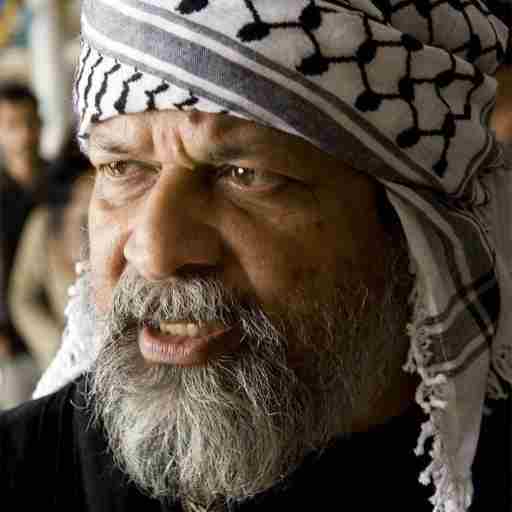
The shutting-down of two photographic exhibitions in Dhaka’s Drik Gallery in just the last few months proves that Bangladesh’s censors, unlike lightning, can strike at the same place more than once – especially where Drik’s photographic practices are concerned. But then, Drik seems to have become a lightning rod inviting censure, and this will not be the last time either. Not if I know Shahidul Alam and his commitment to pushing photography in what he calls “the majority world”. If actually being knifed has not stopped him, nothing will.

The British Council in Dhaka had once tried to shut down a Drik exhibition by Roshini Kampadoo because it “hurt the image of Britain”. And in November last year it was the turn of the Chinese embassy in Dhaka that wanted an exhibition on Tibet, also in Drik, to be closed. When a personal visit by the Chinese Cultural Counsellor and his cultural attaché bearing gifts (calendar, a silk tie and tea) didn’t work, they invoked worsening diplomatic relations and brought to bear the weight of the Bangladeshi government, Special Branch police and even parliamentarians. But Alam didn’t buckle, instead inaugurating the exhibition in the street after the gallery was locked up by the police. He shut it down the next day, however, as a protest against the interference.

Alam’s new exhibition and installation, “Crossfire”, should have been safer from threats of closure. It was not photojournalistic documentary or even an Americanised ‘documentary style’. It showed no dead or disappeared people. Much more conceptual, it allegorically invoked the disappeared through subtler and quieter means. But because it dealt with ‘crossfire’ deaths by specially raised Rapid Action Battalions (in India, one would call these ‘encounter deaths’), it drew fire – and closure, and protests against the closure.

The ever defiant Mahashweta Devi, confronts Shah Aalm, the officer in charge of Dhanmondi Thaka, outside the Drik entrance. © Taslima Akhter

Armed police barricaded the gates of Drik Gallery to prevent the exhibition Crossfire, organisers opened the exhibition on the streets outside of the Drik Gallery. March 22, 2010. © Saikat Majumder/DrikNews/Majority World

There is something about photography that invites censorship. The power of the photographic image simply has to be controlled, it seems – one way or another. If ideas of aesthetics, beauty and spiritual values don’t work, governments pass and use anti-terror laws. And internationally applicable anti-terror laws, with the attendant globalised cultural control, are now beginning to have a universal presence, reach and influence.

Shahidul Alam steals a kiss from Mahasweta Devi after the roadside opening of Alam's Crossfire exhibit. CNN reporter Ric Wasserman and New Age Editor Nurul Kabir, look on. © Saikat Majumder/DrikNews/Majority World

Shahidul Alam speaks at roadside opening of "Crossfire" exhibition outside Drik Gallery. Guest speakers Mahasweta Devi (centre) and Nurul Kabir (right) were also present. © Taslima Akhter

The symbolic opening of "Crossfire" was through Mahasweta Devi unlocking handcuffs on Shahidul Alam's hands, to cries of "To the end of crossfire" from the crowds. © Saikat Majumder/DrikNews/Majority World

Any critical photography is subtly suppressed by evoking ideas of photography as a ‘fine art’, and by inducing self-censorship before it is more pointedly and politically policed through action by the state’s security services. Self-censorship, I believe, was at the heart of the lack of any decent coverage, by Indian photographers, of the Emergency and the 1984 anti-Sikh riots.

The desire to control the photographic message is, however, universal. And that desire is as old as the medium itself. From colonial control of the photography during the 19th century to anti-terror laws in the era of the global ‘war on terror’ to control the photographic images of the 21st century, little seems to have changed. The power of photography to control and manipulate perception of the world’s raw realities is too important to be left unchallenged. It is noteworthy that these do not even have to be powers from one’s own country. Perception management is a global political strategy with a global reach; it is globally practiced.

Alam managed to evade police and sneaked inside Drik Gallery to join a video conference with Jean Francois Julliard, secretary general of Reporters sans frontières (RSF) in Paris. © Saikat Majumder/DrikNews/Majority World

Enraged students from Charukola, the Fine Arts Institute in Dhaka University formed a human chain to protest to forced closure of Drik gallery. March 23, 2010. © Amdadul Huq/DrikNews/Majority World

Human chain by students of Charukala. March 23, 2010. © Amdadul Huq/DrikNews/Majority World

"Closing down Drik Gallery is the same as banning painting" says poster at human chain outside Charukala. March 23, 2010. © Amdadul Huq/DrikNews/Majority World

In February, Uzbekistan convicted a photographer for “slandering the Nation”. Umida Akhmeddova had been documenting the daily struggles of ordinary people, and was accused of “portraying the people as backward and poor”. Her “photo album [did] not conform to aesthetic demands” and “would damage Uzbekistan’s spiritual values”, said the expert panel appointed to look at her work.

The Abu Ghraib photos were not shot by professional photojournalists, yet special laws were passed by the US Congress to prevent their dissemination. Most of the pictures and video footage still remain out of reach – legally secured, not only by the special acts of the US Congress, but also through the raising of issues such as the right to privacy of the ‘victims’ and their oppressors, and by wives of the soldier-photographers who raised issues of personal copyright to prevent these photographs from being seen more widely.

Anti-terrorism laws are also being used to prevent photography in Britain’s streets. Photographing the most well-known monuments has become suspect, with even professional press photographers being harassed by local police. Street photography, we have to remember, has a long and proud tradition, and the streets have a central space in the practice of urban photography. Even photography as a safely sanitised art form, a documentary style, is not a safe practice. But then, safety is not what should drive photography. It needs to recover and secure its critical spaces – its critical power.

Satish Sharma is a photographer, critic and occasional curator. He was a former tutor at Pathshala and currently lives in Kathmandu.

The article was published in Himal Southasian

Tags: , , , , , , , , , , , ,

Here Sleeps A Gentle Giant

January 25th, 2010 | 1 Comment | Posted in Photography

He was clearly a peasant, and appeared to have travelled a long way to get to the photography museum. But unlike other visitors to the museum, he didn’t make his way to the exhibits or marvel at the splendour of the site. It was an officer he wanted, and finding his way through the labyrinthine corridors, he entered the office of the curator and took out his tattered prints.

Tea was brought in for the visitor along with the sugar cubes Iranians plop into their mouth, as they sip the liquid. The curator went through all the prints. Treating each with the gentle care only a lover of photography has for original prints. With a broad gentle smile, he beckoned the man to a more quiet room. They began to talk. They were now old friends.

It is this love for photography, this passion for the medium and the generosity of the man that has characterised Bahman Jalali. The show he had organized for me at the Tehran Museum of Contemporary Arts, was done at a time when I was relatively unknown. I was surprised that a curator in Iran had searched out a photographer in Bangladesh, to judge their international contest, and to show work at one of their most prestigious venues.  The friendship and hospitality of Bahman and his photographer wife Rana, was the foundation for the love for Iran and its arts that has stayed with me.

After the tragic death of Kaveh Golestan, Bahman had been instrumental in the setting up of the Kaveh Golestan Awards. I was humbled at being asked to give away the prizes at the first award ceremony.  Again, it was Bahman, who had insisted that a photographer from Bangladesh, rather than a big western name be asked to be the chief guest at this important ceremony. Rahnuma had joined me on this trip. She rarely accompanies me on my trips abroad, but for Iran I didn’t have to do too much convincing. Once in Tehran, she soon found her own circle of friends. Bahman and Rana we shared. Later, when Shadi and Omid, came over to participate in Chobi Mela, Shadi became Ma’s adopted daughter.

My later trips involved meeting many other Iranians I was proud to consider my friends. The unpublished manuscripts Abbas Kiarostami showed me in his house, Ruchira and Sunil taking me to the gallery para of Tehran, the long chat and the exclusive view of ‘sensitive work’ by the ever provocative Parvaneh Etemadi at her studio, bumping into Isabelle Esraghi in a back street in Isfahan, meeting my old friend Satish Sharma at my talk in Tehran, were all moments to savour, but it was the long conversations with Bahman and Rana, where we shared dreams about photography and fiercely argued the merits of our favourite images, that has made Iran so special for me.

I had often wondered why Iran had given birth to so many great photographers. It was while Abbas was chairing Magnum, that I had taken two young photographers, Shehzad Noorani and Mahmud to visit the Magnum office in Paris. I remember the star struck youngsters soaking everything in, as Abbas walked them through the corridors that have heard the footsteps of so many of the greats of photography. Reza Deghati, had made three visits to Pathshala. We had featured his work in Chobi Mela, and felt proud at having featured him in one of Drik’s calendars. His brother Manoocher had also spoken to Pathshala students. A DrikNews photographer had the privilege of assisting him as a fixer. Being close to a great Ustad is still one of the finest ways to learn. My attempts to get Kiorastomi to Bangladesh had met snags with scheduling, but it was my failure to get Bahman to Chobi Mela that had vexed me the most. Before Dr. Hashemi of the Iranian Cultural Centre in Dhaka left, he had promised to arrange it via SABA, the Iranian Art Academy. It was to be a highlight of Chobi Mela VI.

Chris Rainier had just written about the new National Geographic Awards. I was to help him identify the “Peter Magubanis of photography”, the few individuals who had been the mentors, the inspiration and the driving force in shaping the photography of today. National Geographic will miss this giant amongst giants. Chobi Mela will miss the celebrated artist. I have lost a dear friend. The man who brought in the prints to Bahman’s museum so many years ago, will miss an unusual man who made sharing a cup of tea with a peasant, in a big government office, seem as natural as light passing through a photographer’s lens.

Shahidul Alam

Taipei. 23rd January 2010

Iranian Photographer and Artist Bahman Jalali: 1944-2010

By Syma Sayyah, Tehran


Bahman Jalali

Ustad Bahman Jalali was an internationally acclaimed photographer and renowned artist.  He had a gentle manner that touched all of those that came to know him, he was good hearted, observant, a private and simple man, but an expert in his field.

He was liked and respected as a teacher and photographer by his colleagues, contemporaries and by his many students and without a doubt has influenced many young photographers deeply.  He was known as a war photographer and covered the Iranian Revolution, and published two books Khorramshahr and Days of Blood, Days of Fire.  He was also involved in making documentaries but he is mostly known for the time and devotion that he bestowed on his students and as a real good ustad (teacher) to photographers, photojournalists and his students at the universities that he has taught for many years. He was easily the most popular professor as many students desperately wished to have him as their tutor.

He had collected a large collection of glass negatives from Golestan Palace, and published these in a very interesting book of his, ‘Visible Treasure’.   He was curator of Iran’s first photography museum and he exhibited internationally – currently he was participating in an exhibition in Milwaukee.   In 2007 he was honoured by the Fundacio AntoniTapies in Barcelona by a retrospective exhibition.

I worked with Bahman Jalali during the three years of the Kaveh Golestan Photojournalism Awards for which he was head of the jury as well as a member of the steering committee.  I came to know his gentle yet interesting sense of humour during our many committee meetings and later during less formal dinners and time we all spent together along with our mutual good friend Mrs Golestan.  I always found him calm and serene – he spoke his mind, never insisted but let the logic of his point reveal itself.


Bahman Jalali and Rana Javadi

With his wife, my good friend the photographer Rana Javadi, he lived in a beautiful house in the centre of Tehran where we all went to pay our respects this afternoon.  From what I saw today, the pain and sorrow of his students was overwhelming, one of them said to Rana, “I do not know if we are to express our condolences to you or you to us”  – this made everybody there watery eyed as this young man let out his emotion and cried his heart out along with all of us present.

Bahman had arrived back in Iran from Germany late last night, saying that he wanted to be under his own lahaf (blanket). On Friday morning he did not feel well and so they went to the Tehran Clinic, where everything seemed under control until suddenly at about 3 in the afternoon, he kissed his wife’s hand and smiled and thanked her and a few minutes later left this world for the next, as calmly and quietly as he was famous for.

He will never be forgotten by all those who loved and respected him and I am sure that he will be looking after loved ones and his students from high above.

His funeral will take place on Sunday morning, 17th January, commencing at Artists Forum and he will be buried in the Artists plot at Beheshte Zahra.

Please join me sending his soul a prayer and we hope that his loved ones and Iranian photography will be able to bear this loss.  We are all surrounded by our memories of him.

May he rest in peace.

Tags: , , , , , , , ,

Emerging from the Shadows

Subscribe to ShahidulNews


Share/Bookmark


The first Friday of every month, we would clear out the furniture of Bijon Da’s “Boithok Khana” (drawing room), move some of the chairs out to the verandah, and set up a table for the speakers. People would invariably arrive in dribs and drabs, but pretty soon, the rickety chairs would get filled up and the crowd would spill over into the verandah. This was where Manzoor Alam Beg held court.

Cowboy by Manzoor Alam Beg

Young photographers with their first black and white prints, would mingle with the likes of Rashid Talukder and Anwar Hossain. The ever young Dr. Ansaruddin Ahmed would hand out his pristine prints. The crowd would wait in expectant silence for the results of the monthly photo contest. The monthly photographic newsletter, then without pictures, would be distributed. Invariably, there would be a speech or two. It was a camera club, trade union and a hangout joint, all rolled into one. Despite the mix, the salon smell hung in the air. Much was made of acceptances in salons. A gold medal, a bronze, or even an honourable mention, was celebrated. Winners were generously applauded. Outside of the salon circuit we knew little of what was going on elsewhere, but if it was a well we were living in, it was a nice well. That monthly meeting meant a lot to all of us.

boat by Naibuddin Ahmed

There were few who remained from the old school. The recent split from Pakistan meant that the established studios like Zaidi’s had gone. But the war of liberation changed the Bangladeshi psyche. 1947, while of immense significance to South Asia, meant little to Bangladeshis. History books barely touched upon it. There were few references to it in literature. 1971 on the other hand was a lived experience. Unsurprisingly therefore, apart from the early photographs of Golam Kasem Daddy, dating back to 1918, there are few early photographs from Bangladesh.  There followed a romantic period where photographers like Amanul Haque and Naibuddin Ahmed produced stylized landscapes and carefully set up idyllic images of people. Nawazesh Ahmed and later Anwar Hossain, began to adopt a more contemporary feel to their images. Bijon Sarker and Manzoor Alam Beg, combined elements of classical pictorialism with the curiosity of an experimentalist. Sayeda Khanam was the lone woman of that era. Doggedly pursuing an almost entirely male profession.

Sayeda Khanom

© Sayeda Khanom/Drik/Majority World

1971 was a turning point. Rashid Talukder’s nose for a picture and his journalistic instinct, ensured that he was at the right place at the right time throughout Bangladesh’s turbulent history. Having had no formal education in photography, Talukder was freed of the compositional binds that many contemporary image makers were trapped within. The 2 ¼ square had its own aesthetic, but Talukder and other photojournalists used the balanced frame to capture some of the most disturbing images of the 20th century.

Dismembered head at killing fields of Rayerbazaar. Photo: Rashid Talukder

Dismembered head at killing fields of Rayerbazaar. Photo: Rashid Talukder/Drik/Majority World

Talukder’s dismembered head of a slain intellectual, framed by bricks and their sharp shadows, being perhaps one of the most powerful images of the 20th century. Talukder, Mohammad Shafi, Jalaluddin Haider, Aftab Ahmed were amongst the press photographers who documented some of the everyday events of 1971. But Talukder’s picture of the bayoneting of Biharis, had been hidden from public sight until Drik published it in 1993. Kader Siddiqui, the man responsible for the killings, was too powerful a man to antagonize, and until then, no publication had been prepared to take the risk. A similar frame by Michel Laurent, had meanwhile won a Pulitzer. Talukder’s dismembered head too, had been passed by the the authors of the Century Book. Others, had recorded 1971 in their own way. Taking great risks as amateurs, preserving a history of our birth pangs, knowing it could signal death.

Purple backed sunbird by Shehab Uddin© Shehab Uddin

Photographers then started specializing. S S Barua, and Nawab became the bird specialists, to be later followed by Enamul Huque and Shehab Uddin. Consumerism had approached, and photographers in the new nation were turning to fashion. Shamsul Islam Al Maji brought a modern touch to glamour, but Amanul Haque in his classical style also painted a rural Bangladesh, complete with the beautiful farmer’s wife, her red sari provided by the photographer, her gourd plant, planted by him a year ago, so it would be the right height at the right time of the year.

Moon and cow by Mohammad Ali Salim

Then came the salon era. Mohammad Ali Selim, Kazi Mizanur Rahman, Kashi Nath Nandy, Abdul Malek Babul, Debabrata Chowdhury were all fine photographers, but their arena was the camera club contest. The rule of thirds, the well placed diagonal, the balanced image, was what everyone was making. They entered contests, won prizes, vied for medals and certificates. This was a world in itself. The Bangladesh Photographic Society became the launchpad for the contest winning photographers. The stickers at the back of the prints were often more important than the images themselves. The society newsletter proudly boasted of salon acceptances. Strategies for winning contests were hotly debated at the monthly meetings. Stardom was based on number of medals and not on quality of content. Pretty pictures ruled.

woman in ballot booth

Woman voting at a ballot both. Election 1991 © Shahidul Alam/Drik/Majority World

While photojournalists had recorded street life and political strife, and a few photographers had addressed poverty, there was no culture of documentary practice. No personal projects. Photography was still seen as an illustration, meant to fit in with a predetermined caption. The movement against General Ershad changed all that. Resistance had been building, and the iconic image of Noor Hossain, with “Let Democracy be Freed” painted on his back, was a turning point. In 1971, the photographs were taken surreptitiously, under fear of death. In the new movement, the photographers were in the fore. They were the witnesses of the people and empowered by people’s will. Ershad clamped down on the media, enforcing censorship. The media responded en-masse, stopping publication in protest, but the photographers continued to work, and when the general fell, and an impromptu exhibition was organized of pictures of the movement, the queue outside Zainul Gallery was nearly a mile long. There were near riots as people stormed the gallery to get a glimpse of their hard earned victory.

F5 No 91 24 riots at exhibition entrance

Hasan Saifuddin Chandan controllling the crowd at the entrance to Zainul Gallery. 13th December 1991. © Shahidul Alam/Drik/Majority World

The struggle for democracy had an obvious impact on the photographic movement. 1989 was a significant year. 150 years after the birth of photography, the region’s first photo library, Drik, was set up. The Bangladesh Photographic Instititute was set up. After sustained lobbying by photographers a bill was passed in parliament for a department of photography to be set up in Shilpakala Academy, the academy of fine and performing arts. That too was in 1989 though it was never implemented. The workshops at the Bangladesh Photographic Institute and at Drik showed there was another way of working and that photography had more to offer than simply producing pretty images or winning awards. Photography was also trying to move away from the shadows of painters who still ruled supreme. The success of a photograph had always depended on how well it resembled a painting. The medium began to find its own identity, and while photography was still not considered art, photographers were now not so concerned about the label. So photographers found their own solutions. They did what other artists and media professionals had failed to do. They aggregated, and made up for lack of external support by supporting each other. A revolution was in the making.

But there were other pressures too. Most photographers still found it difficult to make a living and the lure of ‘bidesh’ (foreign lands) was too much for many to withstand. Several of the young photographers who were making the transition away from Salon photography, decided to try their luck overseas. Years later, not one of them has been successful in establishing a career in photography. Nasir Ali Mamoon was an exception in some ways. Portraiture had always been his forte. While others drove taxis, worked in petrol stations, or temped in low paid jobs, Nasir took this opportunity to produce portraits of people he admired. Ginsberg, Gunter Grass and many others filled his album. While unsuccessful commercially, he was able to expand his photographic repertoire and eventually, when he decided to leave the others behind and return to his native land, he was able to establish himself as THE portrait photographer of the era. Fine portraits adorned the newspaper he worked for, and while the post was largely ornamental, he was made the first picture editor of a newspaper.

Der Special Layout-1

There followed a resurgence in the media. With the return of democracy, new newspapers filled the newsstands. There was also another movement taking place. The nation’s first picture library had been set up. While international media had no interest in the democratic struggle in Bangladesh, the cyclone in 1991 that followed was familiar fodder to world media and their appetite was insatiable. There was a difference though. This time the work of local photographers also filled the pages of the New York Times and the Newsweeks of the world. Mostly they were similar images different only in having been taken by locals, but soon the content and the focus also changed. The New York Times published a full page on their Sunday Week in Review on the 1991 cyclone which did not show a single corpse. There were pictures of fishermen rebuilding their boats, farmers replanting seeds, villagers rebuilding their homes. The world began to engage with a new story teller. One with local roots. The first fund raising photo exhibition took place in 1991 and raised over 4000 dollars for cyclone victims.

New_Int'l07_Layout-1

The newly formed agency Drik, began to bring in photographers from all over the globe to conduct workshops. Its regular calendar became a showpiece for Bangladeshi photography. Well printed postcards and posters, complete with credit lines for photography. Photographers learnt to protest when their pictures got stolen. A movement was taking shape. It crystallised with the formation of  Pathshala. The South Asian Institute of Photography. The setting up of the school represented a clear move away from Salon photography. Documentary photographic practice complete with the engagement it involved became an emerging trend. Soon a few women joined the ranks, and the photo stories ranged from the usual ‘subjects’ of international photographers like prostitution and floods to the more personal representation of family life, and the search for identity. The students were hungry, and the explosive mix of inspiring teachers and driven students soon created the photographic explosion that was inevitable. Bangladesh emerged in the world of documentary photography as no other nation had. Before 1998, no Bangladeshi photographer had ever won an award at World Press Photo. Shafiqul Alam Kiron’s winning entry on women victims of acid attacks was soon followed by Chobi Mela, the first festival of photography in the region. The heady mix of great photographers walking down the streets of Dhaka. Showcasing work on the same gallery walls with the best of the best, would have to be inspirational. Meanwhile the school continued shaping their craft, pushing them to their limits. Some made it to Masterclass, others were star students of the seminar programmes. Time Magazine, Newsweek, The Guardian, Le Monde, and other leading publications across the globe suddenly woke up to this great wealth of photography in Bangaldesh.

Then things got stuck. Success is a hard act to live with, and the rapid recognition of the star photographers created a flock of clones who followed. Some found their own identity, but many were just following. Again it was Chobi Mela to the rescue. The identity of the festival itself was changing. Drik’s success had given it the overall stamp of documentary practice, but slowly other photographic genre was creeping in. Fine art, conceptual work, the odd installation, began to work its way into the gallery spaces. The level of intellectual engagement drew many others besides photographers. Practitioners from Africa, Latin America and Australia joined the Europeans and North Americans, and of course Asians who regularly joined the festival. Speakers like Noam Chomsky had conversations with regional legends like Mahashweta Devi. This was all the spark that was needed. A resurgent Pathshala, started producing more provocative work, and broached new territory. It was a movement in the making and the rules were being made as one went along.

Chobi Mela in Kathmandu 4122Chobi Mela V tours to Kathmandu

The Bangladesh segment of the exhibition “When Three Dreams Cross” tries to map this journey, through the images that formed the milestones of this movement. There are significant departures from the mapping we had attempted to follow. The irrelevance of 1947, and the huge presence of 1971, has played a role that is to be expected. Other less expected characteristics have been the absence of the physical representation of habitats, artefacts, and mementos that are often a part of vernacular photography. Until recently, even family photographs, weddings and the many other everyday things that always been the visual basis for understanding cultures has largely not been preserved. Waqar Khan, has made an important contribution by collecting old photographs, mostly from aristocratic homes, which documents some aspects of this history. But the warm humid climes of this delta, has led to the erosion of much of our physical heritage. The shifting of the rivers has led to an uprootment of many who no can no longer relate to a homestead they can call their own. This transience and the nomadic existence that follows has perhaps led to the loss of a need to preserve. Very few archives exist. Not only in visual terms, but in music and film and many other art forms. This absence, in a way, documents a mode of thought and a way of life, that perhaps tells more about Bangladesh than the missing photographs might have done.

Not every artist is featured, but every influence is present through what they, or others who were inspired by them, produced. The early work of Golam Kasem and the establishment of the Camera Recreation Club had a distinct influence. Manzoor Alam Beg’s steadfast role as a mentor and an organizer, held the community together for many years. The Ahmed brothers brought out the first book on photography, and Nawazesh Ahmed, an agronomist with a PhD, brought respectability to the medium and at least for him, an acceptance within academia. Anwar Hossain was the enfante terrible who brought immediate attention through his arresting images, his controversial statements, and his maverick lifestyle. Sadly he too lost the edge that was his hallmark and has largely retired into oblivion. Hasan Saifuddin Chandan and the string of fine photographers who produced evocative images in the early nineties, also lost their way, though the Map Agency, set up by Chandan and a few other talented photographers continues and has made a valuable contribution. Sayeda Farhana, Sanjida Shaheed and a few other photographers, mostly women, began to explore the edges of contemporary photography, using their training as social scientists, fine artists, and in other areas of learning to inject into photography, a tertiary value which the more straight laced, mainstream photographers had failed to achieve. But the moment still belongs to the young crop of photojournalists who have recently emerged from Pathshala. Abir Abdullah, GMB Akash, Saiful Huq Omi, Munem Wasif, Khaled Hasan and other emerging photographers, all photojournalists of exceptional talent, made the world sit up. The wealth of exceptional photography emerging from this small nation has taken the photojournalism world by storm. There are those who feel there is a sameness in their approach that they would like to question and Shumon Ahmed and Momena Jalil are amongst the photographers who have ventured outside the tried and tested path to find other modes of expression. But this incomparable strength in photojournalism cannot be denied. Many of these former students are now the new mentors. The traditional forms of apprenticeship might have been lost over the years, but a more classic form of pedagogy has led to a learning environment that will surely take the world by storm.

Shahidul Alam: Curator

Written for the catalogue of “Where Three Dreams Cross: 150 Years of Photography from India, Pakistan and Bangladesh” 21 January 2010 – 11 April 2010 Galleries 1, 8 & 9 at the Whitechapel Gallery in London. Photographers Naibuddin Ahmed and his younger brother Nawazesh Ahmed, passed away between the time this article was written and when it was published.

Tags: , , , , , , ,

`Dismantling the master’s house’

May 29th, 2009 | No Comments | Posted in Bangladesh, Rahnuma Ahmed, governance

HC judgments on sexual harassment

rahnuma ahmed

The High Court’s verdict was a `revolution’ said Salma Ali, president of Bangladesh Jatiya Mahila Ainjibi Samity (BNWLA)

In response to a Public Interest Litigation (PIL) filed by the BNWLA, the High Court ruled on May 14 that any kind of physical, mental or sexual harassment of women, girls and children at their workplaces, educational institutions and at other public places, including roads, was a criminal offence, punishable by fine and/or imprisonment. The ruling detailed sexual misdemeanour as `any kind of provocation through phone calls or e-mail, lewd gestures, showing of pornography, lurid stares, physical contact or molestation, stalking, vulgar sounds or any display of a derogatory nature.’ The HC Bench directed the government to make a law on the basis of its guidelines; until that happened, it’s guidelines would enjoy the status of law.

On May 17, `another’ revolution took place. The same bench, of Justices Syed Mahmud Hossain and Quamrul Islam Siddiqui, in response to a writ, declared that the decision of the Jahangirnagar University authorities to exonerate Drama and Dramatics chairperson, Sanwar Hossain Sani from charges of sexual harassment and, to suspend six students (which includes four women complainants) for allegedly assaulting him, was `illegal.’ It directed the JU authorities to hold a fresh enquiry . The new one, according to the verdict, should be conducted by `neutral persons.’ It should accord with the HC’s recent guidelines. The writ petition, represented by barrister Sara Hossain and advocate Ruhul Quddus Babu, was jointly filed by Ain o Salish Kendra (ASK), Nijera Kori, Karmojibi Nari, professor Serajul Islam Choudhury, and journalist Kamal Lohani.

The complaints were not proven `beyond any doubt,’ there was no `hard evidence’ — that is what the JU Syndicate had said when clearing Sanwar Hossain of all charges in September 2008. Dismissing this, the HC Bench ruled that the standard of ‘beyond a[ny] reasonable doubt’ could not be applied to allegations of sexual harassment. A slap in the face of the JU authorities? Of the members of the Final Enquiry Committee, the Syndicate, and the university teachers association (JUTA) which had expressed `relief’ at the Syndicate’s decision and had advocated that `indisciplined’ students (and not a teacher who had sexually harassed women students) be punished? Beyond any reasonable doubt.

Of course, we are happy, thrilled, and excited at the HC’s recognition, at its validation of our long-standing demands and struggles. That unwelcome sexual attention is, well, just what it is. Unwelcome. Period. And as Fawzia Karim, the petitioner’s counsel, had argued in court, the absence of a law against sexual harassment, `rampant’ in Bangladesh, means that victims can not file accusations against the offendors.

But our moment of happiness is also overcast with feelings of grief and loss. We have not forgotten our sisters, those who were either killed for having rejected declarations of love, or took their own lives at the humiliation suffered. Simi Banu, art student, taunted and harassed by local mastaans, committed suicide in 2001. Mohima Khatun, raped, killed herself in 2002. Shahinoor, a garment worker, raped, threw herself under a train, in 2003. Biva Rani Singha, a college student, kidnapped and raped for a week in 2003, later became mentally unbalanced. Farzana Afrin Rumi, a college student, hanged herself when a local group of thugs barged into her house to kidnap her, in 2003. Alpina, a class four student, killed herself after being assaulted in front of her mother, in 2003 (Farzana Rahman Shampa). Chameli Tripura, nine years old, was raped and killed in Ramgarh, CHT, in 2008. And many, many more. Killed. Committed suicide. Became mentally ill. Acid disfigurement. Humiliation. No, we have not forgotten our sisters. Nor have we forgotten sub-Inspector Bashar who went to Simi’s house and insulted her parents. He advised them to control `her’ movements. He filed a general diary (GD) against her, instead of her harassers. Nor have we forgotten countless police officers who have repeatedly refused to register complaints made by women and their family members, distraught and angry, seeking safety and protection through legal means.

It was, after all, a bloody revolution.

Will things change? Krishnokoli, a young singer and cultural activist, doesn’t think so. Mere court verdicts are not enough. The political structure of the country needs to be altered first (New Age, May 15).  I understand and sympathise with her misgivings as I turn to look at neighbouring India, at the famous Vishaka judgment (Vishaka and others vs State of Rajasthan and others, Supreme Court, 1997), which is known to have informed our own HC judgment. The Vishaka PIL arose out of the gang rape of Bhanwari Devi, a member of a group of women called sathins, trained by the local government to do house-to-house social work at the village level, in exchange of honorariums. Bhanwari Devi, as part of a government campaign against child marriage, had tried to prevent the marriage of a one year old girl. The family, who happened to be high caste, were outraged at Bhanwari’s audacity. Five men, including the girl’s father, gang-raped her in her husband’s presence. The village authorities, the local police and doctors teamed-up with the rapists: police were reluctant to record her statement, two government doctors refused to examine her. When she finally took her case to the state criminal court, the accused were acquitted. The judge declared that it was not `credible.’ Upper caste men would surely not stoop as low as raping a lower caste woman? The humiliation and violation of the court process, says Naina Kapur, a New Delhi-based lawyer, led her to initiate the Vishaka petition. She, like many others, was frustrated by the criminal justice system’s inability to provide tangible remedies, restore the dignity of the victim, address systemic issues, and to create social change (Avani Mehta Sood, 2006).

The Vishaka PIL has made a significant impression upon the public, says Sood, because it has led to the establishment of systems of legal accountability. It has created tremendous awareness and open acknowledgement of sexual harassment. The judgment has had a huge impact on universities and large workplaces. Women now know that there is a law, and as a human rights lawyer put it, “It makes a big difference to people harassing women as well, to know that they can be called upon it.” Awareness created by the Vishaka decision has also led to many more cases being filed by women victims, at the HC level. However, it has not yet been enacted (The Protection of Women Against Sexual Harassment at the Workplace Bill 2007), and the SC guidelines continue to be the law. Very few complaints comittees have been set up. Service rules have not been amended. The judgment has been flouted by both public and private employers. Social activists have claimed that the guidelines were too general, it did not cover the entire gamut of workplace relationships (for e.g., doctor molesting his patient). The unorganised sector does not fall under the ambit of the Bill. Investigations carried out by the inquiry committees have too often been bound by red-tape, leading to long drawn out cases, and thereby, delaying punishment for the harasser, and adding to the victim’s trauma. But continued activism has led to two significant interim orders being issued by the Supreme Court. One of these asks professional bodies (for e.g. the UGC) what steps they have taken to implement the Vishaka guidelines, while the other, clarifies that the investigation and report of the investigation committee is to be deemed final. Committees have also been directed to submit annual reports of complaints and actions taken, to the government.

By highlighting the problem of sexual harassment, the Vishaka judgment has simultaneously opened up questions and dilemmas over separating sexual harassment from, and its close intermeshing with, other forms of gender-based discrimination/harassment at workplaces (Kalpana Kannabiran and Vasanth Kannabiran 2002). As the authors say, the separation between professional victimisation and sexual harassment is never absolute. And there are other things too. Sometimes sexual harassment can become a weapon of retaliation for progressive dalit men who face offensive and discriminatory behaviour from upper caste and upper class, articulate women classmates and colleagues. Where systemic forms of discrimination and inequality run deep, where the legal system, in its entirety, overwhelmingly promotes unjust hierarchies, are changes possible? Or, to pose Caribbean-American writer, poet and activist, Audre Lordes’ words as a question: can the master’s house be dismantled with the master’s tools?

Not, in its entirety, no. But as I write this, it is also important to acknowledge the difference that it is bound to make at Jahangirnagar, to the lives of six young women and men-students, whose suspension will have to be withdrawn by the JU authorities. The difference that the second HC judgment will make to the lives of four young women complainants who had, against overwhelming odds, protested. Whose dignity — with the help of a new inquiry committtee composed of neutral persons, working in accordance with guidelines set by the HC — will be restored.

Laws, fortunately or unfortunately, are part of the political process. And, revolutions need to be created, and re-created. Again, and yet again.

Published in New Age 25 May 2009

Tags: , , , , , , ,

Pakistan: Hope amidst the chaos

March 7th, 2009 | No Comments | Posted in Global Issues, World

By Salma Hasan Ali

In about a week, InshAllah, I will be traveling to Pakistan. My ticket is booked; visa arrived this morning; shalwar kameezes are at the dry cleaners.

It’s not the ideal time to be going to Pakistan. A recent report by the Atlantic Council said Pakistan “is on a rapid trajectory toward becoming a failing or failed state.” A New York Times editorial last week put it this way: “Almost no one wants to say it out loud. But between the threats from extremists, an unraveling economy, battling civilian leaders and tensions with its nuclear rival India, Pakistan is edging ever closer to the abyss.”

The abyss grew depressingly deeper this week, when the Sri Lankan cricket team was attacked in a commando-style ambush, leaving eight people dead and several players wounded. Twelve gunmen — carrying sacks of ammunition — attacked the team’s bus in broad daylight — in the heart of Lahore — and then escaped in motorized rickshaws. What??

The terrorists knew what they were doing: attack the nation’s most cherished pastime — it’s symbol of camaraderie and goodwill — and you attack the heart and soul of the country and instill maximum fear.

So, why exactly am I going to Pakistan when relatives there and here are counseling not to, and those who can are leaving?

It’s to witness the work of two men – one a Pakistani, the other an American – who are tirelessly, quietly, and with humility working to improve the lives of Pakistanis so the desperation and hopelessness at the root of the current chaos, one day, diminishes.

An AP photograph in the NYT shows those who died in the Lahore massacre lying on stretchers covered with blood-stained white sheets with four letters printed on them: EDHI.

Edhi is hardly known in the United States, but to Pakistanis around the world he is a true hero. In the past 60 years, he’s created one of the largest and most successful health and welfare networks in Asia. He started off begging for donations. Today, he runs a nationwide organization of ambulances, clinics, orphanages, homes for the physically handicapped, blood banks, mortuaries, and much more. Edhi, and his wife of nearly 45 years Bilquis, live in a small two bedroom apartment next to his office in one of the clinics. He accepts no salary. He’s on call 24 hours a day. Their wedding night is indicative of how they spend their days: Edhi and Bilquis rushed a 12-year old girl with major head injuries to the hospital and supervised blood transfusions throughout the night. His vision of charity is at the heart of Islam. Why don’t we hear about it?

Many know of Greg Mortenson’s inspiring story through his best-selling book “Three Cups of Tea”. He is receiving the Sitara-e-Pakistan, Pakistan’s highest civilian award, in Islamabad on March 23rd. No doubt, he will receive the award accompanied by his indomitable Pakistani staff, including Suleman Minhas, with whom I’ve been communicating. After two brief phone conversations, and not even a shared cup of tea, I already feel like family.. I call him “bhai” (brother); he writes to me as “respected Salma”. Most of our conversations have focused on his assuring me not to worry; that the minute I land in Islamabad, I will be his most revered guest. No wonder Mortenson was blown away by Pakistanis’ generosity and warmth.

Maybe Mortenson will bring some of the girls from his schools, because as he always says, they are the true heroes. Perhaps Shakeela, who started by writing with sticks in the sand, and is now in her third year of medical school in Lahore. She will be the first locally educated woman to become a physician. Or maybe Ghosia Mughal, one of the first students to return to school in her village after the devastating 2005 earthquake in Azad Kashmir, that killed her mother, several of her siblings and left her father paralyzed. “Watching that first brave girl enter a school, is like watching man taking his first step on the moon,” says Mortenson. “It’s one giant leap for mankind.” Mortenson is keenly aware that behind one girl comes dozens more, eventually hundreds and thousands.

No doubt there are tragic forces at play in the country trying to undermine the fabric of its politics, culture, society, and soul. Sometimes seemingly overwhelming forces. But there are also kernels of hope that remind us that all will not be lost to violence and a distorted mindset.

There are people like Edhi and thousands more working each day to feed, nurse, console, support and shelter. There are people like Suleman and hundreds of others fiercely loyal to Mortenson’s commitment — and the commitment of so many NGOs around the country — to educate Pakistan’s children. There are young women like Shakeela, smart, capable, determined, and feisty, who will ultimately change the country, if given the chance.

This is the Pakistan I’m going to see. And when I get back, these are the stories I’m going to share, with anyone willing to listen.

Tags: , , , , , , , ,

From the margins. Leaving girlhood behind.

November 10th, 2008 | No Comments | Posted in Bangladesh, Rahnuma Ahmed

by Rahnuma Ahmed

I cannot say when I grew up but I think as you grow older you change in such a way that…it
influences you. Growing older influences you.
— A 22-year-old polytechnic student

Girls from better-off homes are like broiler chicken (farm-er murgi).
— A 19-year-old college student, photographer

Shahidul Alam/Drik/Majority World

© Shahidul Alam/Drik/Majority World

How it all began

At times curious, ‘I don’t know which end the baby comes from, please include that in the book.’ At times plaintive, ‘All these grandmotherly types in the village said, if a boy so much as touches you, you’ll become pregnant. I was terrified, I kept shrinking and slinking away for years and years…’ On occasions stroppy, ‘And yes, you must include a section on pills,’ ‘And there must be a discussion on why wives are not to blame if a girl child is born,’ ‘Also, when a wife is pregnant and starts feeling less y’know, but her husband keeps insisting, can you please have a discussion on how long they can do it, without the baby being harmed?’ On others giggly, ‘And yes, tell those boys that not all girls are to be looked at as (future) wives, but as sisters.’

The idea of putting together a resource book for girls and young women on adolescence grew out of listening in to the whispered conversations of the Out of Focus girls when they stayed with us overnight, some of them for weeks, sometimes more than a month or two, to prepare for their coming matriculate exams. It was the name that a young group of boys and girls of low-income families, who Shahidul trained in photography for many years, had chosen for themselves. And then there was Nahar, who grew up piggybacking on Shahidul, whose mother worked as a peon in the office facing our flat. And also, my experience as a university teacher at Jahangirnagar, where women students, sometimes from other departments as well, would seek me out for advice.

The idea took material shape much later when RIB (Research Initiatives Bangladesh) agreed to fund the initiative of writing a resource-book, a book that would include both information which girls had sought but were denied (‘My bhabi said, you will find out when it happens’), or didn’t know who to ask, how to ask (‘I was curious but afraid of asking my elder sister, she’d have thought I was a bad girl’), and also, their own life-experiences of growing-up. Books for adolescent boys and girls, increasingly made available by NGOs, are generally authored in a seamlessly whole adult voice, one that ‘talks down’ to adolescents. Adolescence is viewed as transitional, a stage of life, as a problem requiring solutions, rather than a period marked by ‘specific psychosexual development’ (Walkowitz, 1980). Gender dynamics, processes of thinking and feeling, informal power, and cultural conceptions of the self are ignored. The need for a nuanced appreciation of material realities, of subjective fears, dreams and aspirations is generally absent. Instead, one sees an over-reliance on the need for disseminating medical, scientific knowledge, totally oblivious to more recent feminist critiques that call for the need ‘to reintegrate the whole person from the jigsaw of parts created by modern scientific medicine’ (Koeske, 1983).

The manuscript was co-authored. Rima, Shetu, Shopna, Moly, Brishti and Doly from Out of Focus, and Nahar, were joined by other girls from the social margins, Epy, Khincchin, Nomita, Lokkhi, Pensila, Maria, Runu, Shebika and Anju, a total of sixteen writers who were assisted by three women anthropologists, Shah Afroditi Panna, Rajina Sultana and myself. The work is now in its final stages.

Tales of growing-up: contributing to family incomes

Girls from social and economic margins contribute to family incomes rather than being dependent, as is the norm in middle-class families. Lokkhi, 21, whose father had retired from the lowest rungs of government service, who had a brother who ‘didn’t count, he doesn’t look after us,’ provides for her family’s food expenses by tutoring several schoolchildren, and doing appliqué embroidery on saris. Brishti’s, 19, father died when she was young, her only sibling is an elder sister, a garments factory worker. ‘After my sister got married, I began supporting my mother and myself, I was on ETV’s Mukto Khobor but the neighbours were suspicious, `She must be up to some tricks,’ they said. Both Lokkhi and Pensila studied at the Open University-run schools, in addition to earning incomes.

Pensila came to Dhaka to work as a domestic help, leaving behind her parents and three siblings, a family of marginal farmers in Chapainawabganj. Her father’s sudden death caused her to leave Dhaka, and we lost contact with our youngest co-author, who was only 14. Shebika, 20, and Epy, 17, two Chakma sisters from Khagrachari, had recently come to Dhaka to join their older, married sister who works in a garments factory. Shebika entered factory work, while Epy took charge of running her sister’s household. The family had lost their home, land and livelihood due to military atrocities, and had been forced to flee to refugee camp life in Tripura, India for ten years. They returned to Bangladesh in the mid-1990s, but impoverishment had already set in. Another co-author was Nomita, a petite sixteen-year old, whose father works as a school guard. Unsuccessful in her Matric exams, Nomita was dolefully considering taking them again, as she sewed chumki on shalwar-kameez-orna sets, piecework that contributed a steady trickle to her family income.

Most of our co-authors described childhood as a time when they ran around freely, played with boys, and had not a single care in the world.

Tales of growing-up: attraction, love and desire

I quizzed Pensila. ‘Yes,’ she said, ‘I would talk with the other girls.’ About? Well, marriage. And? You have to leave your parents. And? Well, the husband… And? I feel shy. Go on, I urged her. You have to sleep beside your husband, she burst out and blushed. Both of us giggled uncontrollably.

Another co-author had said, when I was at home, in the village, I would enjoy it when my boudis (sisters-in-law) would sit and ‘talk dirty’. Rabeya spoke of her own awakenings when she and close friends would sit and pore over a love letter, sent to any one of them, re-reading it for the umpteenth time. Nomita recollected how, soon after her periods began, her cousins’ wives would tease her mercilessly, ‘Now we can marry you off. We will make you jealous. We will keep your husband for a night.’ One of us had asked Lokkhi, what is sexual desire? Do women feel it too? She replied thoughtfully, ‘It is not something that one gives but something that one shares, like say, a husband and his wife, between the two of them.’

Another of our co-authors told us, ‘When my sister doesn’t give in to her husband, and they quarrel, my other sister cautions her, “If you don’t, men are likely to heat up and suffer from a stroke.”’ Dhaka Community Hospital was a partner in the writing project, the medical staff – from doctors to nurses to paramedics – gave generously their time and attention to write answers to a long list of questions drawn up by our co-authors (‘we want to know what the doctors think, what science says,’ was a common refrain of many of our co-authors). We related this incident to Dr Quazi Quamruzzaman, its chairman, and an old friend of mine. We sought his medical opinion. Flabbergasted but quick to regain his composure, Zaman bhai tersely replied, ‘Tell them to bang him on his head.’

Tales of growing-up: parents as sexual

The older co-authors spoke of how mothers often relate to them, their own experiences. Parents have to sacrifice their own needs and desires because the children have grown up, one of them said. ‘We lived in a single room, even that is one thousand to twelve hundred taka rent. Dhaka city is so expensive.’ Another spoke of her family’s circumstances, ‘My sister’s husband died when she was in her early 20s, she returned to live with us. My mother decided, from now on, we will sleep separately. But my father wanted to sleep beside her, he wanted to touch her, to feel her beside him.’

‘We had moved to a new home, a large-ish room,’ related one of them, ‘sixteen hundred taka rent. My elder brother got married, they slept on the newly-partitioned side, while us four siblings slept on the bed. My parents slept on beds made on the floor. There was a daughter-in-law in the house now. My mother became very careful, she wouldn’t let him. But now that my father has passed away, she feels sad. She says, he must have been hurt.’

Rabeya beautifully summed up one of our intense night-long discussions, ‘The problem is not theirs. It is ours. They were unable to tell us that they too, had wanted. And, of course, we never tried to see things from their perspective.’

Tags: , , , , ,

Of Roses and Sexual Harassment

July 7th, 2008 | 6 Comments | Posted in Bangladesh, Rahnuma Ahmed, culture, governance

Subscribe to ShahidulNews


Share/Bookmark


]

by rahnuma ahmed

`You should not have written about such sensitive issues in such indecorous language,’ faculty members at Jahangirnagar University (JU) told me and my ex-colleague, Manosh Chowdhury. It was 1997, four years before I left JU to become a writer.

We had written about the Provost of a Women’s Hall of Residence. He would target first year women Anthropology students. They handed in a memorandum to the University authorities detailing his abuse of power: he was rude to their family members when they dropped in for visits, he ridiculed what they were taught, and the teachers who taught them (this included us). What was not mentioned in the memorandum however, was that he would often barge into their dormitories. Sometimes, also into the wash rooms. The Provost’s misconduct later made it to the newspapers but what got left out was that he had dubbed three women students ‘lesbians,’ and another, ‘a cigarette smoker.’ We had included these in our article to map out the institutionalised nature of the Provost’s power, to draw attention to the systemic character of sexual harassment on campuses. We had written, The issue is not whether these women are `lesbians’. Women have been scorned on other occassions because they have ‘boyfriends’. Women returning to the halls in the evening are taunted, they are told they were `having fun in the bushes.’ Institutional sexual harassment is not about hard facts alone, it takes place through language, through words that ridicule and scorn. (`Oshustho Pradhokkho na ki Pratishthanik Khomota,’ Bhorer Kagoj, 9 July 1997).

We received no printed response, but hate mail instead. And a genteel comment on our `indecorous’ use of language. Our next piece was entitled, ‘What then does one call Sexual Harassment — A Rose?’ (Bhorer Kagoj, 24 August 1997).

The next year witnessed a student movement on Jahangirnagar campus, at forty plus days, the longest anti-rape campaign in South Asia. The University authorities gave in to student pressure, a Fact Finding Committee was formed. As events unfolded it became clear that a group of male students had been involved in successive incidents of rape which had taken place over several months, and that the University authorities had been reluctant to take action because of their political connections to the regime then in power, the Awami League. The movement was strong and unrelenting and gained tremendous popular support. Later, the university authorities meted out token punishment to those very students whom they had earlier protected, rather reluctantly.

A sit-in protest against rape in campus, brought out by the students union, in Jahangir Nagar University, in Dhaka, Bangladesh. August 24, 1998. © Abir Abdullah/Drik/Majority World

One of the demands of the 1998 movement had been the formation of a Policy against Sexual Harassment. Dilara Chowdhury, Mirza Taslima Sultana, Sharmind Neelormi and I had worked long hours for weeks on end, to produce a working draft. I remember, our draft had said, sexual harassment is any unwelcome physical contact and advance, declaration of love accompanied by threat and intimidation if not reciprocated, sexually coloured remarks, display of pornography, any other unwelcome physical, verbal or non-verbal conduct of a sexual nature…

Policy Against Sexual Harassment: A Torturous Journey

Ten years later.

It’s Friday night, well after ten, Anu Muhammod has just returned from Munshiganj, and I am fortunate to get hold of him. `So Anu, I hear that the Policy has not yet been ratified by the University Syndicate?’ I ask the professor of economics at Jahangirnagar University, a well-known public intellectual and activist, and a good friend of many years. With a twinkle in his eyes and a deprecating smile, Anu launches into the story.

Naseem Akhter Hossain and I forwarded the Draft Policy to the university administration in 1999. Naseem, as you well know was the Provost of a women’s hall, and one of the most dedicated members of the Fact Finding Committee. The university administration was absolutely terrified of the anti-rape movement. For them it was finally over, some of the students had been punished, they wanted to forget the matter. The next year, 17 of us forwarded it to JU administration, with a signed letter. And in those days, the 8th of March Committee was alive, teachers and students would sit and discuss women’s issues and male power, we would hold a rally on International Women’s Day, left groups, cultural groups would join in. It was an annual ritual, each year we would send the draft to the University administration requesting that they take steps to ratify it, to enforce it, each year they would tell us that it had been misplaced. This went on for several years.

Two years later the BNP led alliance came to power, and the elected Vice-Chancellor was removed from his position. Jahangirnagar University Teachers Association (JUTA) protested against the government action. Anyway, to cut a long story short, JUTA initiated a movement in protest against the government’s high-handedness, a common platform was formed, I was present at one of the Teachers Association meetings and took the opportunity to place the Draft policy. Everyone was charged, and the Draft was approved, so you now had JUTA forwarding it to the University administration for ratification. I inquired again the next year but by then we were back to the old ritual, it had been misplaced. But soon, there was another incident of sexual harassment, a BBA teacher, the accusations were proven to be true, he lost his job. We raised the Policy issue again, each movement helped to revive it. I spoke to Professor Mustahidur Rahman, who was then the Vice-Chancellor.

`Yes Anu, what did he say?’ I am very curious about the reasons forwarded on behalf of institutions, by people in positions of power, the language in which they resist measures aimed at ensuring justice. ‘What did Mustahid bhai say?’

Anu’s smile deepened. ‘He said, yes, of course, we must look into it. But we have so much on our hands. I spoke to other teachers as well, why do we need a special Policy, they said. The country has criminal laws, University rules stipulate that teachers must not violate moral norms, we also have a Proctorial policy. So why do we need a separate Policy against Sexual Harassment? In 2007, another movement began, against a teacher in Bangla department. He also lost his job later, and talk of the Policy was revived again. Actually, the women students went on a fast unto death programme, this was very serious, later Sultana Kamal, Rokeya Kabir, Khushi Kabeer, these women’s movement leaders came and pleaded with the students to break their fast. They did, but on the condition that I would personally take up the matter with the University administration. They said, we trust you, we don’t trust the administration.

After this, the University set up a Committee to review the Policy. I was on that Committee, so was Sultana Kamal. Legal points were added, the draft was brushed up, student organisations were invited to comment on it, also, the Teachers Association. But the teachers are not happy, many think that false allegations will be made, that it will be used by those who have influence, on grounds of personal enmity. I tell them that the Policy has clauses to prevent this from happening, any one who brings false allegations will be severely punished, no law of the land, against murder, kidnapping, theft, whatever has such built-in-clauses. Surely, that will be a deterrent? But it falls on deaf ears. The draft was sent to the Syndicate, it was not ratified. The members felt that it required more consideration.

And now, the latest incident, the one involving a teacher of the Dramatics department. I believe the Fact Finding Committee has submitted its report, there is yet again talk of instituting the Policy, but this time it’s serious. There is new VC now, but this time I think they can no longer avoid it. There is strong support for the Policy.

This is how things stand at present. I think the Policy, once ratified, will create history. It will set a strong precedent for similar policies at other places of work. In garments factories, I often say, for women, it’s not only a question of wages but being able to work in a safe and secure place, free of harassment and sexual advances.

`And what about other public universities,’ I ask, knowing fully well the answer. No, says Anu, there is no talk of a Policy, let alone a finalised Draft.

Jahangirnagar has a strong tradition of protest and resistance, our conversation ends on this note. I forget who said it. Was it Anu? Or, was it me? Maybe, both of us?

Voices of Female Students

Four women students of Drama and Dramatics department have accused the departmental chairperson, M Sanowar Hossain (Ahmed Sani), of harassing them.

One of them confided to her classmates, Sir has asked me to go and see him. Well, why don’t you? I am afraid. Why? Another woman said, he has asked me to go and see him too. You too? I don’t want to. Why not?

They talked and discovered that they were not alone in their experiences of sexual harassment, that it was shared. One of them said, as is the practice in the department, I had bent to touch his feet to seek his blessings, as I rose up he pulled me and kissed me on my forehead. Another woman student, similarly abused but silent until the four junior women stepped forward, spoke of how he had grabbed her and kissed her cheek. Another woman said, I was so scared when he said I would have to go to his office, but I was angry too, I knew what was going to happen, I told a friend, I’ll carry a brick in my bag. I want to mark him, so that people kow.

But the women also spoke of how they themselves felt marked. When I went back to the hostel and told the girls they wanted to know, what did he do to you? where did he touch you? how long did he hold you? I wept inside, she said. Why didn’t anyone say, where’s that bastard? Let’s go and get him. Such responses make it so difficult to come out. Why should I take on this social pressure?

The girls also said, if it had just happened to me, if I hadn’t discovered that there were other victims, I would never have spoken out. I don’t think anyone would have believed me.

Male Academia and Its Insecurities

Why do University authorities resist the adoption of a policy that will help institute measures to redress wrongs? That will afford women protection against unwanted sexual advances, thereby creating an environment that is in synchrony with what it claims to be, an institution of greater learning and advancement.

I think what lies hidden beneath academic hyperbole is, although the university, as other public and private institutions, appears to be asexual, in reality, it is deeply embedded with sexual categories and preferences. Men are superior, both intellectually and morally, this is assumed to be the incontrovertible truth. For women, to be unmasking and challenging male practices, aided by a Complaint Cell, members of which will listen to their grievances, extend support, advocate sanctions if allegations are proven to be true, is a threat that terrifies the masculine academic regime of power and privileges.

But sexual harassment is not a bunch of roses. It is serious, it needs to be taken seriously.

———————————-

An open letter to the Chancellor of Jahangirnagar University

First published in New Age on 7th July 2008

Tags: , , , , , , , , , , ,

Masterclass

February 9th, 2008 | No Comments | Posted in Photography, Photojournalism, Shahidul Alam, World, culture

Subscribe


Share/Bookmark


It feels strange to be called a ‘master’ when the ‘students’ are such hugely talented photographers. When it includes the inimitable grandmaster David Burnett in our midst the discomfort is complete.

dr-burnett-600px.jpg © Jan Grarup

It was a delight to be in his company again. Though I’ve always enjoyed his images, and we’ve been co-jurors of WPP, this was the first time we’d spent so much time together. The poster for the first ever Chobi Mela in 2000, with his iconic image of the Muktibahini, still hangs on Drik’s corridor. Poor Munem Wasif travelled all the way to Amsterdam only to find his bearded tutor again.
sirio_058.jpgsirio_013.jpgsirio_066.jpgsirio_065.jpgsirio_048.jpgsirio_077.jpgsirio_117.jpg © Sirio Magnabosco

But the pleasure of such company, the energy within those four walls and the sheer joy of seeing such wonderful images, made up for any qualms I might have had. David’s presentation was humbling. It’s candor, its warmth, the enormous breadth of his work and the unquestionable quality of the photography left me breathless.

the-war-we-forgot-1971-600px.jpg © David Burnett/Contact Press Images. Design Reza/Drik

The WPP awards for Christoph, Cédric and Rafel that came in yesterday, was a welcome bonus, but an expected one. This was photography at its finest and despite the vagaries of judging and the imperfections of any selection process, photography such as this must surely rise to the surface.

Oh to be a student again!

cedric-6t.jpgcedric-1t.jpgcedric-2t.jpgcedric-3t.jpgcedric-4t.jpgcedric-5t.jpgcedric-7t.jpg

© Cédric Gerbehaye, Belgium, Agence Vu. Congo in Limbo. General News, 3rd Prize Stories. WPP contest 2007

rafel-1t.jpg

rafel-2t.jpgrafel-3t.jpgrafel-6t.jpgrafel-4t.jpgrafel-5t.jpg

© Rafal Milach, Poland, Anzenberger Agency. Retired circus artists, Poland. Arts and Entertainment, 1st Prize Stories. WPP contest 2007

christoph.jpg

© Christoph Bangert, Germany, Laif. German Army sniper practice target, Kunduz, Afghanistan, 27 April. General News Singles, Honourable Mention. WPP contest 2007

Joop Swart Masterclass 2007:

Masters:

Shahidul Alam
Susan Bright
David Burnett
Ayperi Ecer
Jan Grarup
Barbara Stauss
Brian Storm

Students:

Ghaith Abdul-Ahad
Olivia Arthur
Christoph Bangert
Kate Brooks
Alexandra Demenkova: Sasha
Agnes Dherbeys
Cédric Gerbehaye
Sirio Magnabosco
Rafal Milach
Munem Wasif
Irina Werning
Xin Zhou

Tags: , , , , ,

Changing the Face of Photography

Subscribe


Share/Bookmark


Pathshala, The South Asian Institute of Photography celebrates its 10th anniversary

Elita Karim

Star Weekend Magazine Volume 7 Issue 5 February 8 2008

dswm1.jpg ©D. M. Shibly

Members of the Pathshala family have a lot to celebrate. “My son had once written an essay in class, where he wrote that his mother is a photographer,” says Munira Morshed Munni, freelance photographer, photo editor at Drik News and teacher at Pathshala. She is also one of the first students of Pathshala, and has been with the school for the last ten years. “His teacher, upon reading the line, immediately cut it out, assuming it to be a mistake made by the child. Later on, I had to go speak to her and explain that I really am a photographer and also make a living out of it. She was dumbstruck for a while.” You can’t blame the teacher, adds Munni. It is still very difficult for the society to accept this art-form as anything but a hobby, a side interest or a skill that is more or less limited to documenting wedding receptions or capturing nice images. Most people are unaware of the detailed calculations made by the seasoned photographer, of the possible number of angles that can be used for one shot, or the analysis of composition, frame and subject in the blink of an eye.

dswm4.jpg Left to Right © Saikot Majumder, Sazzad Ibne Syed, Abir Abdullah

Pathshala, The South Asian Institute of Photography, located on Panthapath, has played a pivotal role in the last decade, in changing the social attitude towards photography as a profession. Offering basic and advanced levels courses in this field, the institution also offers diploma and Bachelor equivalent courses to students. Very soon, a Master’s level programme will also begin in collaboration with the University of Liberal Arts. The school is also a part of the upcoming regional Master’s programme between universities in Bangladesh, China, Indonesia, Nepal, Norway and Pakistan.

Back in 1998, Pathshala had begun as a part of a three-year World Press Photo educational initiative in 1998. As the name Pathshala symbolises the ancient education system held in the open air, under the shade of a tree, free from the confining walls of a classroom, the institute emphasised on not merely conventional teaching the students. It allowed students to ask questions and develop their own style and perspective. The school was designed in a way that leads students to experience knowledge beyond the confines of the discipline.

dswm5.jpg Dr. Shahidul Alam speaking on the institute’s anniversary © D. M. Shibly

According to Shahidul Alam, the Principal of the school and MD of Drik, Pathshala strives to do much more than teach photography. “It is about using the language of images to bring about social change. It is about nurturing minds and encouraging critical thinking. It is about responsible citizenship. In a land where textual literacy is low, it is about reaching out where words have failed. In a society where sleek advertising images construct our sense of values, studying at Pathshala is about challenging cultures of dominance.” Dr. Shahidul Alam speaking on the institute’s anniversary. According to Alam, in the South Asian region, the need for a structured education in photography has always been felt. Since photography plays a significant role in the mainstream media, this need is mostly felt in the field of photojournalism. “The people’s right to information is generally not recognised by the official media in many countries,” he says. “This is clearly also true for the SAARC (South Asian Association for Regional Co-operation) nations. The lack of sufficient professional skills in the media, especially in the field of photojournalism, has also allowed successive governments to pass on propaganda in place of news, and the people’s role in governance has been totally ignored.” Interestingly enough, most students, who go to this school, are studying subjects like Engineering, Medicine, BBA at other universities to comply with the conventional social mindsets. There are some, however, who end up choosing between passion and tradition, hence letting go of the so-called educational system approved by society. One such student is Azizur Rahman Peu, editor of Drik News, teacher at Pathshala and also one of the first students to have entered the school ten years ago. “I was studying medicine in Rongpur,”he says, “when I practically ran away from home to Dhaka. I wanted to be a journalist. Back then, I didn’t know how one would define a journalist. I used to think that a photographer was, obviously, what described a journalist, capturing and documenting moments in history. My love for photography, eventually, led me to start studying here at Pathshala.” Pathshala’s certificate awarding ceremony. Blaming not only the social net, but also the media in Bangladesh, students claim that even inside newsrooms, photographers are not given their worth. A photograph tells a story as well, which should complement the journalist’s written work, rather than act as a side support. “Newsrooms have news editors,” says Shahidul Alam. “However, the concept of a photo editor is not seen in newspaper offices here.” According to Alam, it was the Independent in the UK which had practically revolutionised the way photographs were used in newspapers, hence breaking the system. “Other newspapers like the Guardian had to eventually accept this idea as well.” Pathshala also has regular academic exchanges between Oslo University College in Norway and Edith Cowan University (ECU) in Australia. It is not really an exchange programme, since students from these countries come to Bangladesh to learn about photography and not the other way around, adds Alam. However, this provides Pathshala students an opportunity to share experiences with students of very different backgrounds. “The long-term partnerships with Sunderland University, Bolton University and the Danish School of Journalism, offer educational opportunities for students with other world class institutions. The internship opportunities at Drik, Chobi Mela and Drik News offer on-the-job training that is invaluable in professional life. The regular participation in international festivals and workshops provide a world-view essential to becoming established in the global marketplace. And then there is the acid test. Emerging students are in demand, and ever since Pathshala started, all students who have graduated are gainfully employed. Some are already at the very top of their profession,” says Alam. Celebrating a decade with fireworks. Norman Leslie, the programme director from ECU, says that his students have had the chance to experience life in all its reality and colours through this exchange programme. “ECU is located in Perth, which is a city extremely isolated even in Australian terms,” says Norman. “Students from this university, besides having the advantages of international exposure through this programme, have also created a certain bond between the two cultures which is extremely important when it comes to the art of photography.” Even though passionate about art and photography from an early age, Shahidul Alam had decided to take up photography as a profession by accident. Back in the 80s, Alam was doing his PhD in Chemistry in the United Kingdom. As was the norm and still is in the society, studying a proper subject define the integrity and depth of being a true man. “And that is what my parents believed as well,” says Alam. “I did not have much money and would work to pay my tuitions.” One of his close friends got into the airlines business and asked him to fly to the United States with him. “A poor student like me would never get this opportunity ever again and so I decided to go. My friend in the UK asked me to bring him back a camera since cameras were cheaper in the US.” Alam got a full set complete with a tripod and lens and got back to the UK, only to find that his friend did not have the money to pay him back. “And I was stuck with it!” laughs Alam. Pathshala recently entered its tenth year. Celebrating the school’s anniversary, a three day festival was organised where both the old and the new students presented their works, amidst other festivities.

dswm6.jpg Pathshala’s certificate awarding ceremony © D. M. Shibly

A photography exhibition titled “Studying Life” began marked the beginning of the festival on February 1 at the Drik Gallery. Exhibiting works by some of the most celebrated students of the school, this event was inaugurated by Atiqul Huque Chowdhury and Dr. Shahidul Alam. The exhibition, which will continue up to February 15, features thirty six photographers, including Munem Wasif, Abir Abdullah, GMB Akash, Tanvir Ahmed and many more. On February 2, certificates were distributed to the students who had finished their respective courses, starting from the basic to the undergraduate level. “We had a full-fledged festival, complete with a winter Pitha Utshob,” says Joseph Rozario, the Administrative Manager of Pathshala. “Students, teachers, along with a few photographers from outside the country had discussions on photography. These photographers also presented some of their unique works. The day ended with a film made by one of our own students,” he says.

dswm7.jpg Celebrating a decade with fireworks ©D. M. Shibly

The last day of the festival, February 3, was an “absolute blast,” according to Din M Shibly, a Pathshala graduate who now teaches at the school and works for the monthly magazine Ice Today. The highlight of the day was when Prachyanat, the musical theatre group, performed at the school, much to the delight of the students and also a number of guests who had turned up at the celebrations. The notion that photography cannot be a proper career no longer holds true. Many students from Pathshala are working in the media, both local and international. Tanveer Ahmed, student of Pathshala who now works at Drik News, recently had one of his photographs published in the Time magazine as the picture of the year. The photograph shows a grandfather carrying the dead body of his grandchild after being hit by the Sidr cyclone last year. Many other Pathshala students have won international awards. Alam says that young people believe that there is more glamour and less money in this profession. “It is actually the other way around,” he explains. He plans to work more on visual literacy, hold workshops in schools and develop this field as an academic subject in the educational institutions in Bangladesh. Photography is much more than capturing a mere image. It is what one captures within the image; emotions, environment, thoughts, social perceptions and so on. One simply has to look into a photograph to discover these elements, rather than looking at it. As actor and author Sir Dirk Bogarde had put, “The camera can photograph thought.”

Tags: , , , , , , ,

Studying Life

Subscribe

Share/Bookmark

10th year of Pathshala

Video on Pathshala by Brian Palmer. Commissioned by Pullitzer Foundation:

saikot.jpg Boli. Goat being sacrificed at Hindu religious ceremony. © Saikat Mojumder.


Rashid Talukder had been unwell and had excused himself. The other board members Afzal Chowdhury, Mahfuz Anam, Nawazesh Ahmed and I had pored over the crude portfolios. Much of the work was raw, but there was freshness and a vibrancy that touched us all. This new school would take risks. Ideas would be given a chance.

The students have emulated that principal characteristic of Pathshala. Reaching for the impossible has become the norm. Pushing the school and themselves to the limit has been their mode of practice. Dreaming, a way of life.

On the day of the first workshop, with World Press Photo in 1998, a hastily flung white cloth had covered up the bricks being used for the unfinished construction of the computer lab. On its tenth year, the school boasts achievements by students that is the envy of schools worldwide. The early partnerships, with World Press Photo Foundation, The British Council, Panos Institute, The Thomson Foundation and Free Voice (formerly CAF) have all played an important role, but the new liaisons, with the University of Liberal Arts in Bangladesh, and the upcoming regional masters programme between universities in Bangladesh, China, Indonesia, Nepal, Norway and Pakistan are paving the way for a school that has matured beyond its years.

The academic exchanges with Oslo University College in Norway and Edith Cowan University in Australia provide Pathshala students an opportunity to share experiences with students of very different backgrounds. The long-term partnerships with Sunderland University, Bolton University and the Danish School of Journalism, offer educational opportunities for students with other world class institutions. The internship opportunities at Drik, Chobi Mela and Drik News offer on-the-job training that is invaluable in professional life. The regular participation in international festivals and workshops provide a world-view essential to becoming established in the global marketplace. And then there is the acid test. Emerging students are in demand, and ever since Pathshala started, all students who have graduated are gainfully employed. Some are already at the very top of their profession.

But the goal of Pathshala is far more than teaching photography. It is about using the language of images to bring about social change. It is about nurturing minds and encouraging critical thinking. It is about responsible citizenship. In a land where textual literacy is low, it is about reaching out where words have failed. In a society where sleek advertising images construct our sense of values, studying at Pathshala is about challenging cultures of dominance.

Curating an exhibition of so diverse a group is always difficult. One wants to be inclusive but selective. Demonstrate trends, but value differences. Nurture new talent, but recognise excellence. Choose favorites but not be partisan. The greater importance given to some artists has as much to do with what needs to be said now as it has to do with the calibre of their work. Pathshala cannot be an academic island untouched by local realities. While recognising the merit of those producing quality work, space has also to be given to voices that need to be heard now. These are images of ‘Now’ being articulated.

Shahidul Alam

A True Pathshala

The word Pathshala, a traditional Sanskrit word for a seat of learning, was generally associated with the shade of mango trees in open fields. There were no walls, no classrooms, no formal structures, but children gathered to listen to wise folk. It was wisdom being shared.

Having decided that the language of images was the tool to use to challenge western hegemony and to address social inequality within the country, Drik had begun to put in place the building blocks to make it happen. The agency was serving people already in the trade, but opportunities for learning had to be created. There wasn’t a single credible organization for higher education in photography in the region. One had to be built. Taking advantage of a World Press Photo seminar on 18th December 1998, the school was setup. A single classroom was all that was available. The visiting tutors Chris Boot (formerly with Magnum, then with Phaidon) and Reza Deghati (National Geographic) conducted the workshops. I continued as a lone tutor. Kirsten Claire an English photographer whom a friend had recommended, came over soon afterwards and stayed for a year. We paid her a local salary, the best we could afford. The two of us formed the faculty.

A stream of tutors, all friends willing to be arm twisted, came at regular intervals. For some we provided air fare and modest accommodation. Some came at their own cost. Some slept on our floor. Some, like Ian Berry, who had come over on an assignment, were simply roped in. The students, most new to the craft, didn’t know they were rubbing shoulders with the greatest names in photography. And it was an impressive list of names. Abbas, David Wells, Daniel Meadows, John Vink, Ian Berry, Ingrid Pollard, Martin Parr, Morten Krogvold, Pablo Bartholomew, Pedro Meyer, Raghu Rai, Reza Deghati, Robert Pledge, Steven Mayes, Tim Hetherington, Trent Parke and many others had spent quality time with Bangladeshi photographers. Some had come even before Pathshala started. Some, like Robert Pledge, Reza Deghati, Abbas, David Wells, Morten Krogvold and Raghu Rai, were repeat visitors. Few demanded payment; none flaunted their superstar stautus, one even made an anonymous donation. They all wanted to be part of a very exciting journey. One or two wanted to be on the faculty to embellish their CVs, but they all gave generously, and this organization has been built on their labour of love.

Lazy at first and unaware of how special the environment was, the students soon became infected by the passion of their marvelous tutors. They studied photography, economics, statistics, environmental studies, visual anthropology. They were in a true Pathshala, studying life. And it showed. Despite the limited resources of the school, we maintained one goal we had set for ourselves at the outset. Every emerging student was gainfully employed. The trend has continued since 1998. They got selected for the prestigious Joop Schwart Masterclass. They won awards like the Mother Jones, World Press, the National Geographic All Roads and a host of other prestigious awards. Time Magazine, Newsweek, New York Times and other leading publications began to hire them, and the reputation spread. Soon students and interns from other countries began to come in. Most were from neighbouring countries, but some from far flung places like Norway, the USA and Australia wanted to join.

The number of regular tutors has grown from the original two to eleven. Eight are former students. The tutor to student ratio remains very high. DrikNews, a news agency which gives emphasis to rural reporting, hires former Pathshala students for its their core staff. The staff photographers and picture editors of most major newspapers in Bangladesh are from Pathshala. Some are also working in television stations and other broadcast media. And Pathshala continues to defy gravity. A school of photography in one of the most economically impoverished nations and with no external support, continues to produce some of the finest emerging photographers.

Shahidul Alam
The school of photography Pathshala, is entering its tenth year. Greetings to all students, teachers and well-wishers who have journeyed with us over the last nine years. An exhibition “Studying Life” featuring the work of Pathshala students and alumni will mark the beginning of our celebrations.

Pioneer playright and theatre person Atiqul Huque Chowdhury will inaugurate the exhibition on 1st February 2008 at 5:00 pm at Drik Gallery.

The exhibition will continue till 15th February 2008 and will be open to all from 3:00 pm till 8:00 pm.

You are invited.

Inauguration date: 1 February 2008
Time: 5:00 pm
Exhibition duration: 1 February – 15 February 2008 (3-8 pm. every day)
Venue: Drik Gallery, House 58, Road 15A (new), Dhanmondi Residential Area, Dhaka.

Programme:

1 February 2008
5:00 pm, Drik Gallery
Opening of photography exhibition “Studying Life”

2 February 2008
Pathshala Campus (16 Sukrabad, Panthapath)
3:00 pm: Certificate Distribution
3:45 pm: Discussion on Photography
4:30 pm: Portfolio Presentation
5:15 pm: Film Show

3 February 2008
Pathshala Campus (16 Sukrabad, Panthapath)
2:30 pm: Portfolio Presentation
6:30 pm: Songs by Prachyanat
8:30 pm: Dinner

Selected photographs from the exhibition can be seen in the Drik 2008 Calendar:

calendar-2008-cover.jpg

Submissions are invited for Chobi Mela V. The theme is “Freedom”. The online submission form will be available at www.chobimela.org from the 7th February 2008.

Tags: , , , , , , , ,