
Browse > Home / Archive by category 'Bangladesh'

| Subcribe via RSS

Traces of Absence

An exhibition of photographs by Shahidul Alam

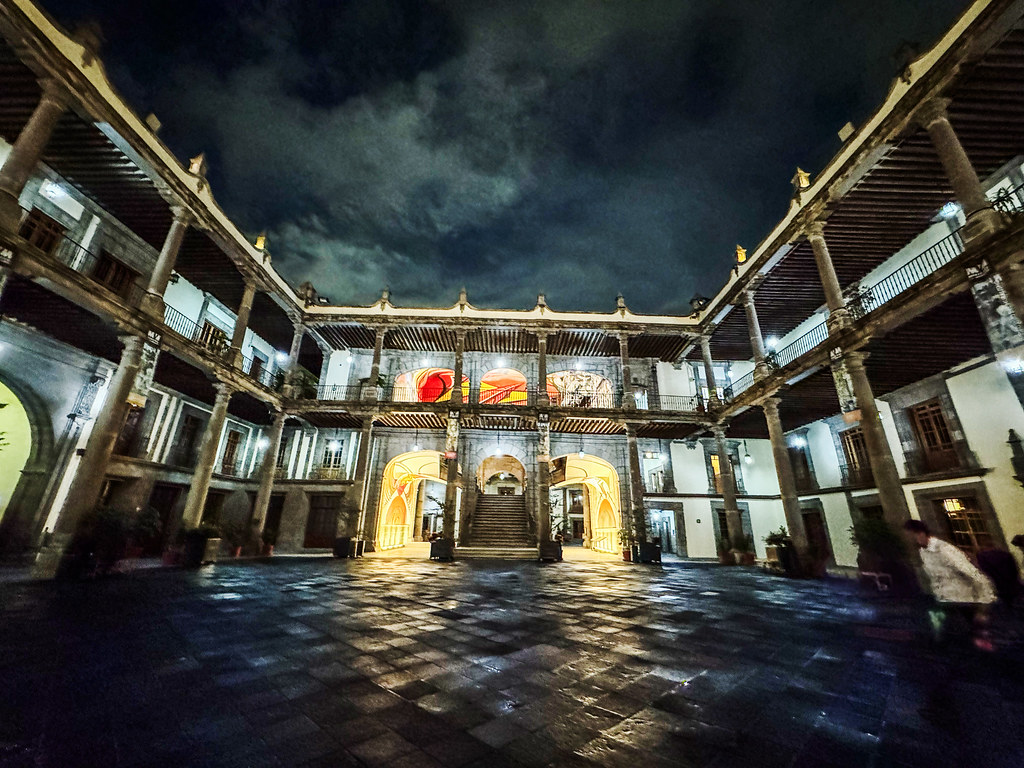
There is a wall running along a street. The writing on it is fragmented and cannot quite be made sense of. The image was taken in the middle of the night and a yellow glare was allowed to invade the site, as the wall slipped away at an angle. A shadowy presence barely registered on the shot. This urban setting, one is tempted to say, could be nothing but the scene of a crime. The sinister, uneasy beauty of this work by Shahidul Alam informs other images that are part of his new series, again and again. Others are eerie, otherworldly; and others still, seem familiar yet are anguished, as if the common ground for existence was being subtracted from the picture altogether.

Photography is usually taken at face value and recognized as the construction of a factual world, and celebrated as such, for facts possess a no-nonsense value – or so we would like to believe – that will hopefully help us to get things crystal-clear in the mind. The printed image is envisaged and expected, by the many who support this view, to be self-evident, and self-explanatory, too.

To transform photography into the art of tracing an absence is not a method that is self-evident, and yet a case can be made for it: the print, which is an image on its physical support, is one more object added to the world and is often made to stand for what once was, never to be fixed or grasped in the same manner again. But in the images of this series, what is it we are missing that fills us with anxiety of some kind or another? When acutely perceived, an absence stops us in our speech, it wracks and unnerves us; it unsettles the mind. Absence, as a matter of fact, can be identified, can be lingered on and felt, but cannot be quantified and any attempts at giving a qualified description of the feelings involved are bound to fail.

Whatever one is led to believe should be expected of contemporary photographic work in the documentary mode, this series challenges starkly. Artificial lighting has been used throughout and its effect is not just strange but painful. The series offers no narrative to behold but the images hold together, perhaps because their author finds different ways to remind us that we will not find a place to rest our heads in them. These are nocturnal viewings in a sleepless night.

Jorge Villacorta

Curator

More at:

New York Times Review

Rights Exposure Review

Front Page Manob Jomin (Bangla)

Tags: , , , , , , , , , , ,

Ethnically Singular Nationalist Narratives

`Warring factions’ in the CHT

By Rahnuma Ahmed

In homage to Kalpana Chakma, who is marginal to the Bengali-dominated women’s movement in Bangladesh, which, regardless of its internal differences, is seamlessly united in its collective refusal to critically engage with the issues of ethnic domination and Bengali nationalism.

Also, to critically engage with the issue of imperial politics.

Kalpana was a leader of the Hill Women’s Federation. She was abducted, allegedly by a military officer, who was accompanied by other Bengalis, on the night of 11 June 1996. She was then a college student, aged 20-21.

Sheikh Hasina’s Awami League-led government (1996-2001) was forced to set up a committee to investigate her disappearance. It submitted a report which has never been made public. Sources close to the military, and this includes a Bangladeshi human rights organisation, insisted that she had eloped, with the very officer whom she had publicly accused of watching over and harassing her, a few days earlier. This story blended into another which was made to do the rounds: Kalpana had been seen in Tripura (India).

Thirteen years later, Kalpana still remains missing. She still remains marginal—as do all jumma women as jummas—to the women’s movement in Bangladesh which remains closely wedded to the dominant Bengali paradigm that unites the ruling and opposition parties, that is enshrined not only in the Constitution, but also in the hearts and minds of the state’s functionaries be they bureaucrats, petty officials, members of the law-enforcing agencies, or the military. `We won the nation, it is ours’ just about sums up the Bengali perspective on liberation, one that is historically inaccurate given the sacrifices of hill peoples and other ethnic peoples during 1971. An inaccuracy that does not detract the nation’s intellectuals, its poets and novelists, teachers and writers, playwrights and journalists from excluding `those’ ethnic others from the stories of courage which they weave and re-weave every December, every February and March, to connect us, to our collective past.

Some Bengali women however, working in small groups and clusters, or, as individuals, also belonging to the women’s movement, have attempted, over the years, to re-imagine a nation-state that is inclusionary. In other words, to conceptually dismantle the dominant Bengali/ nationalist paradigm. To include Bangladesh’s ethnic `others,’ especially, the jummas of CHT, whose lives and cultures have been disrupted most violently, a disruption that feeds off the dominant Bengali/nationalist paradigm, that employs a clever line of reasoning (`If someone from Noakhali can settle in Rangpur, why can’t he go and live and work in the CHT? It’s one country, after all’) to cover-up for a concerted military campaign of occupation (killing paharis, settling Bengali civilians, land-grabbing etc) for over two and a half decades. These women attempted to connect the lives of Bengali women to pahari women by drawing on the shared experiences of both groups of women: living under military occupation (1971 for Bengali women, post-1975 for jumma women), being subjected to sexual harassment, and to rape. It was a time when Bengali feminist history-writing of ekattur was just beginning. When Bengali women were seeking to explore the meanings of shadhinota for the women of this land, when they sought to go beyond the Bengali masculinist inability to engage with women’s experiences of rape, and its trauma (beyond uttering platitudes. Which, they still do). Besides feminism, these women also drew on the ideas which symbolised the political spirit of that time—the movement for democracy against Ershad, the military dictator. These ideas, and the spirit in which it was embodied, had a long history. They had been nurtured when the people of East Pakistan had taken to the streets to protest against Ayub’s rule. Against Yahya’s government. Against all military regimes, everywhere.

But the world has changed since.

The Failure of Bengali Intellectuals

`Like the Shahid Minar, the Bangla Academy too, is one of the symbols of the language movement.’ I agree. Absolutely, I said.

I was one of the discussants on Manzur-e-Mowla’s paper, `Bangla Academy: Bhobisshote Jemon Dekhte Chai’ (Bangla Academy: As one wishes to see it in future), at a programme which was part of Bangla Academy’s month long  celebrations commemorating the language movement. It was the 26th of February this year.

What I had forgotten to add was that, at the other symbol of the language movement this year, i.e., at the Shahid Minar, at exactly the same time, no language movement celebrations were taking place. Instead, protestors—both Bengalis and Jummas, but also, other Bangladeshis too—had gathered to condemn the recurring incidents of ethnic violence in Baghaicchari, (Rangamati), and in Mohajonpara, Milanpur, Madhupur, Shatbaiyapara (Khagracchari) in February this year. I did not forget to add however, this year’s Ekushey February was reddened with pahari blood. It shames me.

The founders of Bangla Academy, Manzur-e-Mowla pointed out in his paper, had envisioned it as a research institute. This was one of the other sentences that I picked out, saying that I wanted to tease out its implications for me. By research I understand the production of new knowledge, but also, new ways of seeing that which one assumes to be already known. Both kinds of knowledge is generated by the efforts of researchers and writers, by the activities of intellectuals. The chiefly two-party political system which Bangladesh has come to enjoy since the overthrow of president Ershad, extends to the production of knowledge too. This is most unfortunate. The country may be independent but its intellectuals aren’t, the intellectuals either belong to the BNP, or to the AL, they frame what they think, what they say according to the dictates of the party that they belong to. In his presentation Manzur-e-Mowla had mentioned that the Fellows of Bangla Academy should not be those who had been opposed to the independence of Bangladesh. I fully agree, I would only like to push his observation a bit further. The Fellows of Bangla Academy should be truly independent, they should not be durbar intellectuals who bow and scrape before politicians, whose thinking follows the party political line.

I had said, I think that when we speak of these matters we should also take the help of theoretical discussions, such as, let’s say  the ideas of Edward Said who had said, there is an urgent need to keep two things separate, on the one hand, the practice and function of the intellectual, and on the other, politics. Combining intellectual practice and functions with political ambitions is dangerous. It is deadly. I added, and I think we can also benefit from Noam Chomsky’s theoretical ideas, to do with manufacturing consent. I think we should keep these in our head when we speak of the kind of Bangla Academy that we would like to see in future, so that we can examine and analyse the role of intellectuals here, also, to be able to ask intellectuals how they see their own roles, whether they see their own function as manufacturing consent for the rulers. What if this leads to betraying the dreams and aspirations of the common people? Surely, it is up to the intellectuals to caution people, and vested quarters against pocketing the independence struggle for corporate gains? Against turning the language movement into a purely Bengali event? Yes, we had fought for our mother tongue, and yes, it has achieved international recognition, but that is because people the world over are attached to their own mother tongue, and it is these attachment, these feelings that have led them to sympathise with us. That is why 21 February has won international recognition. But we must ask ourselves whether we have learnt to respect the spirit of the language movement, or whether the language movement, Bangla bhasha, and Bangali nationhood, which were once rallying cries against oppression, have become tools of oppression themselves. When the Shaotals of Bangladesh sing ora amar mukher bhasha kaira nite chaey (they want to snatch away our mother tongue), they mean `us’ Bengalis. Surely that is a matter of shame?

When Manzur-e-Mowla says, `Bangla Academy Bangladesher shob manusher protishthan,’ I wish I could agree with him. But it’s not true. It belongs only to the Bengalis, not to all. Not to Bangladeshis.

Later I caught myself thinking, but the Shahid Minar is. After all, that is where people had gathered to protest at the injustices against those who were left out of the national dream.

The challenges that lie ahead of Bangla Academy are greater. It remains to be seen whether Bengali intellectuals will rise up to meet the challenge.

`Warring factions,’ and imperial politics

I had written above, But the world has changed since.

The Chittagong Hill Tracts is often spoken of as a zone of ethnic conflict, with different warring factions:

- the Bangladesh government (led by whichever party happens to be in power)

- the Bangladesh military

- PCJSS (Parbotto Chottogram Jana Shanghati Samiti)

- UPDF (United Peoples Democratic Front)

- the Bengali settlers

conflicts which prevent the furthering of development agendas which will benefit all, especially its older inhabitants, the jummas. Which will assist in securing human rights for all. Will promote harmony, peace and justice. On the face of it, there is nothing with which any one in their right minds would disagree.

But what I find disconcerting is the inability to raise equally searching questions about those who represent CHT and its politics in such a manner. I was reading the European Union’s press statement regarding the recent incidents in the CHT and trying to remember whether I had seen them issue any statement about Guantanamo. Or Abu Ghuraib. Did they? Had they? Instead, if I remember correctly, most of these European nations had joined the US in the invasion of Afghanistan and Iraq, had opposed the will of their own people through doing so, hadn’t they?

But then, all the more reason, I cannot help but think, to put our own house in order. A Bangla Academy for all, a nation for all. And, this being the month of March, Bengali intellectuals could begin by re-writing their nationalist narratives. Making them inclusionary.

Published in New Age 8 March 2010

Tags: , , , , , , ,

A Tribute to Our Forgotten Sisters

March 8th, 2010 | 2 Comments | Posted in Bangladesh, Global Issues, People, World, governance

Majeda, Jarina, Farida and Many other Garment Workers


Bodies of child garment workers who died in a fire in a factory in Mirpur. Dhaka. 1990. © Azizur Rahim Peu/Drik/Majority World

By Saydia Gulrukh

Triangle Shirtwaist Factory Fire, New York City, March 25, 1911

Whoever saw the hellish fire at 33 Washington Place,
A terrible tragedy, something quite new,
Can never forget it, And everyone knows many lives were lost.
They were incinerated, In a factory 10 stories high.
There were horrible screams from the onlookers,
Those who were burned alive
And those who choked in the smoke.

(Yehuda Horvitz wrote and sung this song to the tune of a Jewish prayer to commemorate the deaths of Jewish women in the Triangle Fire)

In many ways, the Triangle Shirtwaist Company was just another sweatshop factory in the heart of Manhattan. It was located on the top three floors of the ten-story Asch Building just at the end of Washington Square. All that characterizes a sweatshop – low wages, excessively long hours, and unsanitary and dangerous working conditions – was part of its factory policy. Most of the several hundred Triangle employees were young women.  Many among them were recently-arrived Italian or Jewish immigrants.

On March 25, 1911, as the hours of the clock approached the closing time, a fire broke out on the top floors of the Asch Building. Flames leapt from discarded rags between the first and second rows of cutting tables.  The fire spread everywhere, as several men continued to fling water at the fire.  In the thickening smoke, a shipping clerk dragged a hose in the stairwell into the rapidly heating room, but nothing came out.  Terrified and screaming girls tried to climb down the narrow fire escape.  Some girls trapped on the ninth floor jumped through the window (Leon Stein, Out of the Sweat Shop, 1977). By the time the fire was over, 146 women garment worker had died. The next two days were marked with the horror and grief of families and comrades desperately trying to identify their dear ones from the bodies burned to bare bones.

In 1909, when women garment workers started to organize and called for a strike demanding better pay, safe working environment, Triangle Shirtwaist was one of the factories which agreed to only a partial settlement. One of the demands that was not met in this settlement was the demand for adequate fire escapes (Meredith Tax, The Uprising Thirty Thousands, 1994). These deaths, horrifyingly cruel, agitated the members of International Ladies Garment Workers Union (ILGWU). Many thousands joined the funeral procession, they mourned the lives lost, and demanded the safety for workers.

Two weeks after the fire, a grand jury indicted Triangle Shirtwaist owners Isaac Harris and Max Blanck on charges of manslaughter. Three years after the fire, on March 11, 1914, twenty-three individual civil suits against the owner of the Asch Building were settled.  The average recovery was $75 per life lost. Calls for justice continued to grow, thirty-six new laws reforming the state labor code were enacted between 1911 and 1914, those who survived the fire were left to live, and relive, those agonizing moments.

Garib and Garib Sweater Factory, Gazipur, February 25, 2010

21 killed at Garib and Garib Factory, Gazipur, 2010

62 killed at KTS Garments, Chittagong, 2006

23 killed at Shan Knitting, Narayanganj, 2005

23 killed at Chowdhury Knitwear, Narsingdi, 2004

23 killed at Macro Sweater, Dhaka, 2000

12 killed at Globe Knitting, Dhaka, 2000

24 killed at Shanghai Apparels, Dhaka, 1997

20 killed at Jahanara Fashion, Narayanganj, 1997

22 killed at Lusaka Garments, Dhaka, 1996

32 killed at Saraka Garments, Dhaka, 1990

(Source: The Daily Star, March 1, 2010)

It was a little after 9 o’clock at night, workers were finishing their shift. Some were still working, Abdul Mannan of the Garib and Garib factory’s sampling section was among them. He was working on the second floor when he first saw the flame and breathed smoke. It was coming from the first floor. A short circuit had occurred near a large stock of flammable acrylic sweaters, which produced thick and extremely toxic smoke and quickly transformed the factory into a ‘gas chamber’ (Bdnews24.com, Feb26, 2010). Zarina, Farida, Majeda, Sahara, Majida, Rahima, Shantana, Momtaz, Rasheda, Shahinur, Rawshan, Jahanar, Rina and Sufia were on the sixth floor as the monstrous fire swallowed the building.  The main power was immediately turned off. In the pitch dark, workers, both men and women, ran up stairs to escape, but blazing fires and toxic smoke followed them.

21 workers including 15 women were killed in the fire incident at Garib & Garib Sweater Factory in Bhogra, Gazipur on Thursday night. The fire brigade authorities formed a three-member committee, headed by its deputy director (administration and finance), to find out the cause of the fire. However, they suspect the fire might have originated from a short-circuit. Dhaka, Bangladesh. February 26, 2010. Yasin Abdullah/DrikNews

Within half an hour, ambulances and firefighters had circled the building, they started their rescue mission but came across dead bodies only: Kashem, Badal, Alamgir, Mainul and Pradeep, bodies which lay haphazardly in the stairway, there were many others. The events that followed were rather routine. After hours of effort, the fire-fighters tamed the unruly fire.  The Fire Brigade authorities, BGMEA and the government formed three different probe committees to investigate the cause of fire (Daily Star, Feb 27, 2010). In a ‘sympathetic’ gesture, the authority bore the cost of the burials and kept the factory closed for four days to mourn the deceased workers.  The BGMEA ‘expressed sorrow at the death of the workers and announced Tk 2 lakh as compensation for each worker’ (New Age, Feb 26, 2010). Labor organizations and left-alliances protested, demanding better compensation, and immediate punishment of those responsible.  They continue to protest, to hold meetings in Muktangon, in Shahid Minar, in Gazipur too, protests which barely manage to prevent us from forgetting about them. Perhaps through taming the fire, the fire-fighters had also tamed the sparks of our anger, anger at the deaths, anger at exploitative and unjust practices in the garments industry.

Collectively Resisting Our Amnesia

The hundred years which separates these two tragedies in the history of the garments industry, incidents that are strikingly similar, also coincides with the international women’s movement which has turned a hundred year’s old. By placing these two stories side by side, I don’t intend to undermine the struggles and achievements of our movement, to argue that ‘nothing has changed.’ My interest lies in the differences in our response to the two tragedies.

People gathered in thousands to cordon the dead bodies of Triangle factory workers, to hold the hands of hysterically grieving relatives and friends. The ILGWU proposed an official day of mourning. The grief-stricken city gathered in churches, synagogues, and finally, in the streets. In 1911, the funeral procession turned into an ocean of grief as countless numbers of people joined in, while the dead bodies of Zarina, Majeda and Farida were sent in separate ambulances to their village, and the only people who joined in that final journey, besides their family members, were the police. We do not join in their funeral procession in the thousands, we do not take over the street to mourn the lives of these women who had slaved their youth away for the much celebrated, and steady increase in the nation’s GDP. As I read Yehuda Horvitz songs written to commemorate the lives of the women killed in the Triangle fire, I look for songs sung celebrating the lives lost here. What I find is a statistical rhyme, an incomprehensive list of the numbers of workers killed in garments factory fires in the last decade. The thought of garments factories being ‘gas-chambers’ horrifies us  as long as the news remains fresh, and soon enough, we manage to find ways of returning to the national narrative, working in the garments sector is a stepping stone to women’s empowerment. Images of blazing fires rapidly disappear, stories of Rasheda, Shahinur, Rawshan choking to death are conveniently forgotten. In 1911, many women in the funeral procession in New York city had carried placards which said “we mourn our loss; we demand real progress in workers protection.” In 2010, we do not mourn our loss. We read of our loss in the newspapers.

There has been much talk of corporate greed and sweatshops, many editorials have been written protesting the criminal indifference of factory owners. Locally and globally, every year thousands of pages are written analyzing the sweatshop economy and the feminization of the global labor force. Perhaps, it’s time to analyze our deadly indifference. On international women’s day, a true tribute to Rahima, Shantana, Momtaz and many other sisters whose names will soon be lost in the statistical crowd, can be offered by resisting our own collective amnesia.

Saydia Gulrukh is a PhD student at the University of North Carolina – Chapel Hill, USA

and a faculty member of Pathshala, The South Asian Media Academy

Published in New Age, 8 March 2010

Tags: , , , , , , , , ,

My Sister’s Language

March 2nd, 2010 | 3 Comments | Posted in Bangladesh, People, governance

His eyes flitted forward and back, and having surveyed the scene for possible danger, it stopped. The head stooped, and that was how he stayed. Crouched on the floor of a bus full of Bangalis, the Pahari (hill person) amongst us, was living in occupied land. Keeping out of trouble was his best chance for survival.

It was only when the uniformed men with guns boarded the bus and prodded him that he raised his eyes. Scared, tired, hurt, angry eyes. But he knew enough to not express his anger. Meekly he obeyed the commands. His humiliation was also ours, but we did not complain. We were tourists in our own land, but the constitutional guarantees enshrined in our laws, while not fully respected anywhere, was particularly absent here. As well-connected Bangalis, we were far more safe than he was. But the rules of occupation are never generous, and they had guns. They left. We breathed more easily. He continued his journey with his head bowed. I took no photographs.

Walking through Rangamati as Bangali tourists was a disconcerting feeling. Many of the Bangalis here were also poor. Displaced from their homes in far away places, they had been dumped here with promises of a happy life. Left to fend for themselves, they joined the power chain well above the Paharis, but very low down all the same.

At the top of the chain was the military. Then the wealthy Bangalis, the ones who made the deals, then came the Paharis who had sided with the government. The Bangali settlers (the poor ones anyway), were quite a bit further down. The Paharis never dared to reach for the rungs of that ladder.

Rangamati was still a beautiful place. The homes buried beneath the lake when the Kaptai Dam was built, the tropical rain forests that had been destroyed, the hill people who were forced to leave their ancestral land, were things that never made it to our history books. The Hill Tracts featured in the picturesque postcards and tourism ministry books and the well rehearsed cultural programmes in the government Tribal Centre.

Occasional photographers from the lowlands came to discover the ‘authentic tribal lifestyle’. A bare chest woman bathing by a waterfall, backlit women with children strapped on their backs, a wrinkled old woman smoking a pipe and other photographic trophies were potential award winners.

As anticipated, the tiktikis (lit: geckos, local term for government spies, generally members of ‘Special Branch’) soon found us. They followed us everywhere. Asked stupid questions. Made notes. Questioned the people we had spoken to or visited. We consciously stayed away from friends. No point in getting them into trouble.

At a later visit, Drik’s printer Nasir and I had gone to Bandorban. Amongst the photographs I’d taken on that trip was this one of a mother weaving. Perhaps I was repeating what the trophy hunters had done, but the poster above the window, part of a UNICEF blindness prevention campaign, had words that seemed poignant. “hai re kopal mondo, chokh thakite ondho’.  (oh what irony we find, we have eyes but are blind.)

Mother and Child in Bandorban. Poster above window is part of blindness prevention campaign of UNICEF. Shahidul Alam/Drik/Majority World

Mother and Child in Bandorban. Poster above window is part of blindness prevention campaign of UNICEF. © Shahidul Alam/Drik/Majority World

Military operations in Chittagong Hill Tracts. © Shahidul Alam/Drik/Majority World

Hunting or capturing deer in the Chittagong Hill Tracts was officially banned, but this deer being taken to the major's home, was obviously an exception to the rule. Shahidul Alam/Drik/Majority World

My eyes had shown me the military operations in the hill tracts. The deer being taken to the major’s home. The all Bangali military. The timber being taken to the military camp. While we did see Paharis, carrying loads, and doing odd jobs, most of the shop owners were Bangali settlers. It was Bangalis who had access to the government. They who obtained the local contracts. Menial labour was generally, all that Paharis could aspire to.

Kalpana Chakma’s abduction followed (12th June 1996). Friends got arrested. Some were released, but killed upon release. The violence continued, more murders, more rape, more displacement.

Kalpana Chakma's home. © Saydia Gulrukh Kamal

On 2nd December 1997 the newly elected Awami League (1996) signed the ‘Peace Treaty’ with Jana Samhati Samiti (JSS). This had led to divisions amongst the hill people. Many felt that the core concepts of:

1.            Autonomy for the Chittagong Hill Tracts.

2.            Withdrawal of the Bangali settlers.

3.            Demilitarization of the Chittagong Hill Tracts.

were being compromised. Others were more pragmatic. Even those who questioned the signing of the treaty by JSS, despite their demands not having been met, recognise that peace in CHT is the ultimate goal, and that the land disputes that resulted from the government aided settlement of Bangalis was the core cause of the conflict.

The sole purpose of a nation’s military is to protect the sovereignty of all of its citizens, not to suppress them. The need to protect a nation’s borders cannot justify the forced eviction of people from their ancestral land. The disregard for even the commitments made, exposed the government’s lack of sincerity to the peace deal. Imperfect though it may be, for those clinging to the flimsiest of promises, the treaty still held hope.

The irony of the military and the settlers – in the second term of the Awami League – choosing the month of February, to remind the Paharis of how brutal they could be, was not lost on the survivors of the massacre. Salauddin, Jabbar, Barkat, Rafiq and Salam had died in 1952 to protect our mother tongue. In February 2010 many Pahari names joined the list of people who died for their mother tongue. But these different sounding names would never make it to that official list.

These were names that probably didn’t exist anyway. Without rights to land, citizenship and protection of the state, they were second class citizens at best, fugitives to be hunted, raped and killed at worst.

Shahid Minar at Rupkari High School. It is forbidden to place flowers at this memorial. © Saydia Gulrukh Kamal

matri bhasha (mother tongue), has a very different meaning when your mother is Pahari. Kalpana, I failed you as a brother, when they abducted you. I failed you as a friend, when they killed your brothers Mantosh, Samar, Shukesh and Rupan. I fail you now as a citizen, when my military and my government burn your villages, murder your families, take away your land. I fail you all as a human being, when you are prevented from laying flowers at the Shahid Minar in your village home. amar bhaier rokte rangano, ekushey february. ami ki bhulite pari. This month, red with your warm blood. I cannot, will not, must not, ever forget.

Shahidul Alam

Dhaka

28th February 2010

A story in Croatia with similar concerns:

Tags: , , , , , , , , , , , , , , , ,

Where Three Dreams Cross

March 2nd, 2010 | 1 Comment | Posted in Bangladesh, Photography, World

By Rosa Maria Falvo

Spanning 150 years of photography from India, Pakistan, and Bangladesh, this ambitious survey of historic and contemporary works includes over 400 images by 82 artists. Using ’shared culture’ as a parameter, it is the first comprehensive vision of South Asia to be presented in the West; these images are not ‘about’ the region and there are no European perspectives to be seen. Indeed, those looking for a text driven, ethnographic narrative of an ex-colonial world will sadly be missing the point.

Installed in a bastion of Western art – London’s Whitechapel Gallery – 63 years after Indian Independence and the subsequent dissolution of the British Raj, this show aspires to explore its topography with decidedly indigenous eyes. Of course, politics is inherent in picture making – our ‘ways of seeing’ and the context in which we see them pose fundamental issues. Refreshingly, this is a case of self-discovery, a kind of meditative picturing of a collective self and its geographical truths, where the ‘other’ is observing from within.

Workers at a construction site. Circa 1988. © Mohammad Ali Salim/Drik/Majority World

Images like Mohammad Ali Salim’s Worker’s at a city construction site… (Bangladesh, 1980) and Mohammad Arif Ali’s Rainy Days Image of Lahore (Pakistan, 2008) are not invested in archetypal victims or street urchins. While they do not ignore the pain or the facts, they offer a purposeful and frequently hopeful alternative to the media driven images of death and destruction, which have arguably desensitised audiences on the ‘outside’. The curators have set out to question and even defy our received notions of the Subcontinent, presenting a sort of counter-colonial response to the official Western history of photography. They are asking us to celebrate South Asia’s contribution, beginning in India in 1850, and in this sense the show becomes a pioneering catalyst, inspired by the gaps.

The curatorial line wants to trace the finer social and creative turning points inherent in each body of work. Sunil Gupta references a particular instance in how transsexuals are depicted in the context of the historic “fluidity of sexuality in India”, previously outlawed under colonial law. While homogenisation is an obvious danger, he is quick to remind us that “culture cannot be partitioned”, and the power of photography to engage contemporary audiences is such that ‘Westerners’ are likely to notice the similarities between these nations, while ‘South Asians’ are necessarily sensitive to their differences. But the landscape is shifting, as ‘majority world‘ issues are increasingly addressed by those who understand them most and can no longer be ignored. More representations of the internal structures of hitherto ‘foreign’ realities will eventually balance out those one-dimensional visions of systems, symptoms, and conflicts. If there is a trend in the emergence of ‘indigenous photographers’ it is that they are able to achieve an intimacy with their subjects which enhances their humanity. For me it is this authenticity of image making that carries the editorial eloquence of its subject matter.

Paradoxically, despite its thriving art market, photography as a discipline is still emerging in India. And in Pakistan interest in this medium by a new generation of artists is a promising but recent phenomenon. Bangladesh has led the way with an established international festival – Chobi Mela – and Dhaka’s dynamic Drik gallery (Sanskrit for vision) which has represented local professionals for more than 20 years.

This show is arranged in five thematic sections, which inevitably blend into and across national stories: the portrait, the performance, the family, the street, and the body politic.

The wife of popular Bollywood movie star Amitabh Bachhan, Joya Vaduri, before marriage. The image on the cover of Film Fare magazine is of Sharmila Thakur. This image was taken while Joya Vaduri and her friend Sharmila Thakur were shooting in Satyajit Ray's movie "Mahanagar" at Studio Nol. The beard and moustache was painted on the face of Sharmila Thakur with pen. The Headline reads "The way I would like to see you." Joya. 1963. © Amanul Huq/Drik/Majority World

Portrait of Mother Teresa. Dhaka, Bangladesh. January, 1981. © Nasir Ali Mamun/Drik/Majority World

Legendary photographers from Bangladesh, such as Amanul Huq and Nasir Ali Mamun are presented alongside their present-day counterparts, such as Abir Abdullah, Shumon Ahmed, and Shahidul Alam.

Sex workers attend a protest rally with torch after the eviction from the 180 year old brothel at Tanbazaar, Narayangonj. © Abir Abdullah/Drik/Majority World

Shumon Ahmed self portrait

Surrounded by her worldly belongings, a woman cooks the family meal. The next day, the water had risen another three feet. Jinjira, Dhaka, Bangladesh. 1988. © Shahidul Alam/Drik/Majority World

There are works from the early 19th century from the renowned Alkazi Collection in Delhi, the Abhishek Poddar Collection in Bangalore, and the White Star Archive in Karachi, and many previously unseen works from family archives, galleries, and established contemporary artists. We see hand-painted images of courtesans and families by anonymous photographers in the very first Indian-run studios, journalistic depictions of key political events (Rashid Talukder’s Sheikh Mujibur Rahman returns to his homeland… in 1972 and Benazir Bhutto’s arrival at Karachi airport in 1988), and cutting edge reconfigurations of the built up environment (Farida Batool’s “Nai Reesan Shehr Lahore Diyan” 2006, and Rashid Rana’s Twins 2007). As virtual co-protagonists in the unfolding of these stories, viewers are left to provide their own social critiques.

Bangladesh : Sheikh Mujibur Rahman returns to his homeland on being released from the jail in Pakistan. January, 1972. © Rashid Talukder/Drik/Majority World

Fantastic circus acts (Saibal Das’s Matinee Show 2001) and glamorous Bollywood stars (Dev Anand and Meena Kumari in the 1950s) capture portraits within portraits, reinforcing photography’s ability to empower the object of its gaze. Here is a region reconstructing its own image, touching on castes and sexuality as naturally as geopolitics and environmental disasters. It is not the ‘otherness’ we need to consider, but rather our willingness to become re-acquainted with what we have presumed to know.

Echoing the literary musing of one of the curators, Radhika Singh, who titled the show on a line from T.S Eliot’s Ash Wednesday (1930) – “This is the time of tension between dying and birth; The place of solitude where three dreams cross…” – I can’t help recalling William Blake’s Letter to Revd Dr Trusler (1799) – “As a man is, so he sees. As the eye is formed, such are its powers”. Packaging imagery and argument is always problematic, but this show’s self-assured and celebratory tones manage to amaze both aesthetically and intellectually. As if the collective lens were refocused on the circulation of discourse and the forging of transnational connections between people across time. It’s a pity this exhibition is not, at least at this stage, travelling to places like Birmingham or Leicester, where the fields of vision from within contemporary Britain would no doubt offer even richer educational perspectives.

Rosa Maria Falvo

Independent writer and curator, with a focus on Asian contemporary art. She is the Asia-Pacific Publications and Projects Consultant for Skira International Publishing in Milan.

First published in Nafas Art Magazine a project of the Institute for Foreign Cultural Relations (ifa, Germany)

Tags: , , , , ,

Two Kinds of Death and the Unattended ‘National Wounds’

February 10th, 2010 | 2 Comments | Posted in Bangladesh, governance

By Saydia Gulrukh

For the past few months, I have been preparing for an almost meaningless exam, one which graduate students in the US have to take, called ‘comps’ (short for comprehensive/PhD candidacy exam). During moments of sarcasm, we also call it the intellectual boot camp. While preparing for the exams, I have created a bubble around me, a self-imposed isolation, as if the Atlantic Ocean between me and Dhaka is not vast enough. Inside this carefully constructed bubble, I allow myself to read Bangladeshi newspapers or reply to emails only during periods of protracted procrastination. Friends’ requests to read their pieces pile up. The news of a launch capsizing on the eve of Eid-ul-Azha, news headlines of RMG workers’ awful plight remotely catches my eyes – shamefully so. I rapidly read emails, I quick-read news from home and elsewhere, whether good or bad, I don’t have moments to react and reflect. It is in this privileged insulated life of mine, that I get an email from Rahnuma that Jashim Uddin Manik, the ‘alleged’ rapist, has died of cardiac arrest in Italy.

In the next few days, I get many emails, all from old friends from the anti-rape movement. In 1998 the students of Jahangirnagar University took to the streets for two months protesting against campus rape, and demanding punishment of the rapists, many of whom were Bangladesh Chhatra League activists. These emails bore witness to those nights when we sat in front of the university’s administrative building shouting, ‘Amar boner apoman shojjho kora hobe na, dhorshonkari jei hok bichar take petei hobe’ (We will not tolerate our sister’s dishonor, the rapist must be punished, whoever he may be). I would not read the letter but only its subject heading, and flag it to read later. An email from Jashim Uddin Manik’s friend incidentally landed in my mail box, forwarded by a friend. It expressed shock and grief at the untimely death of a close friend. It contained routine details which follow such news. Jashim Uddin Manik died in Padova, Milano at around 10:30pm local time (which I guess, on the basis of email exchanges, would be January 5). His body lies in a morgue while his Italian friends are making arrangements to send his body back to Bangladesh. Manik’s wife took the news very badly, she’s still not herself. In the email, Manik’s friend writes how hard it is for him to stop his tears, he urges everyone (the recipients of his email) to pray for the departed soul. In a way, there’s nothing striking about this email. A grief-stricken friend is breaking to others the news of the death of a close friend. Yet, the ordinariness of the news sends a chill down my spine.

In 1998, during the anti-rape movement in Jahangirnagar University, Manik had been identified by the disciplinary committee (fact-finding committee) as having been one of the rapists. We knew of him as the Chhatra League cadre who was said to have distributed sweets to ‘celebrate’ his 100th rape. I re-read the last line of his friend’s email – please pray for the departed soul. I stumble at each word, did the man who committed many rapes, if not a hundred, one who had the heart to celebrate it, have a soul? But it’s for a few seconds only, and I close my email window.

I try to thicken the bubble around me. I must pass this exam.

My indifference towards Manik’s death makes me start thinking about death. Any news of death is supposedly saddening. But here I am, sitting in front of my laptop, recollecting the details of his sexual offences, and flinching. His crime had been proven in front of the university administration. He had been punished for what they had termed ‘misconduct’; his studentship had been cancelled. However, no legal case had been filed against him. I remembered those days when many of us, those for whom the anti-rape movement in Jahangirnagar University had been a political turning point, had shared hours of rage as we had read news of Manik fleeing/flying to Italy. In those shared moments of rage and despair, we had learned to recognise the gendered nature of the university, and of our legal system. Since the movement ended, in the decade that has gone, the rage which we had felt has presumably turned into indifference.

I mean no disrespect toward his grieving family and friends. I am sure it is an irreplaceable loss for them. His death matters to me only in the larger historical context of Bangladesh. What does this particular fate of the alleged serial rapist tells us about the legal system? How does it write the history of violence against woman? If I remember correctly, many national dailies printed headlines during the movement that the incidents of rape on Jahangirnagar University campus are for us a matter of ‘national shame’ (jatir kolonko). I cannot help but wonder what is the state of national shame when known rapists are never brought to justice? When the sexual harassment policy on Jahangirnagar University campus still remains not enacted, officially?

The clock ticks away… my exam is only a few months away. I try harder to thicken the bubble. I succeed but only for two and a half weeks.

On January 28, the convicted murderers of Bangabandhu, five former army men, were hanged at Dhaka Central Jail, after midnight. They were proven guilty of killing the country’s founding president Sheikh Mujibur Rahman, and all but two members of his family, on August 15, 1975. And yet again, emails overflowed my mailbox. A friend called a number of times, finally, leaving a Facebook message: ‘I see that they executed Sheikh Mujib’s killers. It must be a good thing? It was weird going to his house and seeing the blood stains and thinking they were still about.’

Her question leaves me perplexed. More than a week after the event, I visit the online archives of daily newspapers to retrieve the issue of January 28. I watch ATN news clips posted on the Daily Star website. Most of the reports try to walk us through the execution night, covering each moment of waiting at the jail gate between 11:00pm to 3:00am. As I read along, I feel uneasy at news of the celebratory chants, and the flashing of V-signs. Members of the public had gathered at the jail gate, they had chanted slogans as the serial executions had been completed. I think, what would have been an acceptable response to the execution of the death penalty of Sheikh Mujib’s killers? Amnesty International has condemned the executions for being ‘hasty’ while a European Union delegation to Bangladesh has found the trial ‘respectable’ (New Age, January 29), but it added a twist. The EU statement said, it was, in principle, opposed ‘to all death penalty in all cases and all circumstances’ (New Age, January 29). Their principled opposition to death penalty, interestingly enough, excludes cases like Saddam Hussein and Chemical Ali. In the final months and days of this trial, a debate on death penalty had surfaced, but I don’t want to engage with that debate today.

Colonel Jamil’s widowed wife’s narrative of August 15 reminded me that at issue was not only the healing of the surviving daughters of Bangabandhu, but that there are others too, who had faced similar losses, had equally waited for the execution (Daily Star, November 19, 2009). For a split second, I thought about the emotional wound and the healing of the family members of Siraj Sikdar. Is it time to talk of other extrajudicial killings? To talk about Cholesh Richil? But, maybe, I am moving too fast, in both directions, past and future. Let me dwell on the present – on the night of the execution, the chants and the flashing of V-signs.

I go to blogs which I have not dared to visit the last couple of weeks or more, may be months. Activist bloggers and Facebook friends express similar discomfort at the celebration, the flashing of V-signs. Involved debates trace the missing pieces to reconstruct the political context which had led to the killing of Sheikh Mujibur Rahman. A friend who had gone to the jail gate had posted a video clip on Facebook. I watch it a few times to see what people had chanted – ‘ajker ai dine mujib tomay mone pore’ (On this day, today, we are thinking of you Mujib). A comment on the video-post caught my eyes, ‘Shouldn’t Henry Kissinger have been somewhere in there?’ Implicit in this question is the alleged ‘foreign involvement’ in the coup. I remember reading in Willem Van Schendel’s History of Bangladesh (2009) that ‘by the spring of 1975 the Indians knew about the possible coup and warned Mujib about it’ (p 182). I believe, by ‘Indians’, he had meant the Indian intelligence, the government. The fact that a neighbouring state knew suggests that the coup of 1975 had involved far more political stakeholders than those who had been convicted, and hanged. The execution of Mujib’s killers may have healed the trauma of his family and followers but the ‘national wound’ is far from being healed. Imperial links with the assassination of Sheikh Mujib remains undisclosed. It remains outside the circle of our political concerns.

We have been witnesses to two kinds of death, one was natural, the other unnatural. The wounds to the nation in both cases remain open. Unattended.

Saydia Gulrukh is a PhD student at the University of North Carolina (Chapel Hill), USA and a faculty member of Pathshala, The South Asian Media Academy

Published in New Age February 11, 2010

Tags: , , , , , , , , , , , ,

Emerging from the Shadows

The first Friday of every month, we would clear out the furniture of Bijon Da’s “Boithok Khana” (drawing room), move some of the chairs out to the verandah, and set up a table for the speakers. People would invariably arrive in dribs and drabs, but pretty soon, the rickety chairs would get filled up and the crowd would spill over into the verandah. This was where Manzoor Alam Beg held court.

Cowboy by Manzoor Alam Beg

Young photographers with their first black and white prints, would mingle with the likes of Rashid Talukder and Anwar Hossain. The ever young Dr. Ansaruddin Ahmed would hand out his pristine prints. The crowd would wait in expectant silence for the results of the monthly photo contest. The monthly photographic newsletter, then without pictures, would be distributed. Invariably, there would be a speech or two. It was a camera club, trade union and a hangout joint, all rolled into one. Despite the mix, the salon smell hung in the air. Much was made of acceptances in salons. A gold medal, a bronze, or even an honourable mention, was celebrated. Winners were generously applauded. Outside of the salon circuit we knew little of what was going on elsewhere, but if it was a well we were living in, it was a nice well. That monthly meeting meant a lot to all of us.

boat by Naibuddin Ahmed

There were few who remained from the old school. The recent split from Pakistan meant that the established studios like Zaidi’s had gone. But the war of liberation changed the Bangladeshi psyche. 1947, while of immense significance to South Asia, meant little to Bangladeshis. History books barely touched upon it. There were few references to it in literature. 1971 on the other hand was a lived experience. Unsurprisingly therefore, apart from the early photographs of Golam Kasem Daddy, dating back to 1918, there are few early photographs from Bangladesh.  There followed a romantic period where photographers like Amanul Haque and Naibuddin Ahmed produced stylized landscapes and carefully set up idyllic images of people. Nawazesh Ahmed and later Anwar Hossain, began to adopt a more contemporary feel to their images. Bijon Sarker and Manzoor Alam Beg, combined elements of classical pictorialism with the curiosity of an experimentalist. Sayeda Khanam was the lone woman of that era. Doggedly pursuing an almost entirely male profession.

Sayeda Khanom

© Sayeda Khanom/Drik/Majority World

1971 was a turning point. Rashid Talukder’s nose for a picture and his journalistic instinct, ensured that he was at the right place at the right time throughout Bangladesh’s turbulent history. Having had no formal education in photography, Talukder was freed of the compositional binds that many contemporary image makers were trapped within. The 2 ¼ square had its own aesthetic, but Talukder and other photojournalists used the balanced frame to capture some of the most disturbing images of the 20th century.

Dismembered head at killing fields of Rayerbazaar. Photo: Rashid Talukder

Dismembered head at killing fields of Rayerbazaar. Photo: Rashid Talukder/Drik/Majority World

Talukder’s dismembered head of a slain intellectual, framed by bricks and their sharp shadows, being perhaps one of the most powerful images of the 20th century. Talukder, Mohammad Shafi, Jalaluddin Haider, Aftab Ahmed were amongst the press photographers who documented some of the everyday events of 1971. But Talukder’s picture of the bayoneting of Biharis, had been hidden from public sight until Drik published it in 1993. Kader Siddiqui, the man responsible for the killings, was too powerful a man to antagonize, and until then, no publication had been prepared to take the risk. A similar frame by Michel Laurent, had meanwhile won a Pulitzer. Talukder’s dismembered head too, had been passed by the the authors of the Century Book. Others, had recorded 1971 in their own way. Taking great risks as amateurs, preserving a history of our birth pangs, knowing it could signal death.

Purple backed sunbird by Shehab Uddin© Shehab Uddin

Photographers then started specializing. S S Barua, and Nawab became the bird specialists, to be later followed by Enamul Huque and Shehab Uddin. Consumerism had approached, and photographers in the new nation were turning to fashion. Shamsul Islam Al Maji brought a modern touch to glamour, but Amanul Haque in his classical style also painted a rural Bangladesh, complete with the beautiful farmer’s wife, her red sari provided by the photographer, her gourd plant, planted by him a year ago, so it would be the right height at the right time of the year.

Moon and cow by Mohammad Ali Salim

Then came the salon era. Mohammad Ali Selim, Kazi Mizanur Rahman, Kashi Nath Nandy, Abdul Malek Babul, Debabrata Chowdhury were all fine photographers, but their arena was the camera club contest. The rule of thirds, the well placed diagonal, the balanced image, was what everyone was making. They entered contests, won prizes, vied for medals and certificates. This was a world in itself. The Bangladesh Photographic Society became the launchpad for the contest winning photographers. The stickers at the back of the prints were often more important than the images themselves. The society newsletter proudly boasted of salon acceptances. Strategies for winning contests were hotly debated at the monthly meetings. Stardom was based on number of medals and not on quality of content. Pretty pictures ruled.

woman in ballot booth

Woman voting at a ballot both. Election 1991 © Shahidul Alam/Drik/Majority World

While photojournalists had recorded street life and political strife, and a few photographers had addressed poverty, there was no culture of documentary practice. No personal projects. Photography was still seen as an illustration, meant to fit in with a predetermined caption. The movement against General Ershad changed all that. Resistance had been building, and the iconic image of Noor Hossain, with “Let Democracy be Freed” painted on his back, was a turning point. In 1971, the photographs were taken surreptitiously, under fear of death. In the new movement, the photographers were in the fore. They were the witnesses of the people and empowered by people’s will. Ershad clamped down on the media, enforcing censorship. The media responded en-masse, stopping publication in protest, but the photographers continued to work, and when the general fell, and an impromptu exhibition was organized of pictures of the movement, the queue outside Zainul Gallery was nearly a mile long. There were near riots as people stormed the gallery to get a glimpse of their hard earned victory.

F5 No 91 24 riots at exhibition entrance

Hasan Saifuddin Chandan controllling the crowd at the entrance to Zainul Gallery. 13th December 1991. © Shahidul Alam/Drik/Majority World

The struggle for democracy had an obvious impact on the photographic movement. 1989 was a significant year. 150 years after the birth of photography, the region’s first photo library, Drik, was set up. The Bangladesh Photographic Instititute was set up. After sustained lobbying by photographers a bill was passed in parliament for a department of photography to be set up in Shilpakala Academy, the academy of fine and performing arts. That too was in 1989 though it was never implemented. The workshops at the Bangladesh Photographic Institute and at Drik showed there was another way of working and that photography had more to offer than simply producing pretty images or winning awards. Photography was also trying to move away from the shadows of painters who still ruled supreme. The success of a photograph had always depended on how well it resembled a painting. The medium began to find its own identity, and while photography was still not considered art, photographers were now not so concerned about the label. So photographers found their own solutions. They did what other artists and media professionals had failed to do. They aggregated, and made up for lack of external support by supporting each other. A revolution was in the making.

But there were other pressures too. Most photographers still found it difficult to make a living and the lure of ‘bidesh’ (foreign lands) was too much for many to withstand. Several of the young photographers who were making the transition away from Salon photography, decided to try their luck overseas. Years later, not one of them has been successful in establishing a career in photography. Nasir Ali Mamoon was an exception in some ways. Portraiture had always been his forte. While others drove taxis, worked in petrol stations, or temped in low paid jobs, Nasir took this opportunity to produce portraits of people he admired. Ginsberg, Gunter Grass and many others filled his album. While unsuccessful commercially, he was able to expand his photographic repertoire and eventually, when he decided to leave the others behind and return to his native land, he was able to establish himself as THE portrait photographer of the era. Fine portraits adorned the newspaper he worked for, and while the post was largely ornamental, he was made the first picture editor of a newspaper.

Der Special Layout-1

There followed a resurgence in the media. With the return of democracy, new newspapers filled the newsstands. There was also another movement taking place. The nation’s first picture library had been set up. While international media had no interest in the democratic struggle in Bangladesh, the cyclone in 1991 that followed was familiar fodder to world media and their appetite was insatiable. There was a difference though. This time the work of local photographers also filled the pages of the New York Times and the Newsweeks of the world. Mostly they were similar images different only in having been taken by locals, but soon the content and the focus also changed. The New York Times published a full page on their Sunday Week in Review on the 1991 cyclone which did not show a single corpse. There were pictures of fishermen rebuilding their boats, farmers replanting seeds, villagers rebuilding their homes. The world began to engage with a new story teller. One with local roots. The first fund raising photo exhibition took place in 1991 and raised over 4000 dollars for cyclone victims.

New_Int'l07_Layout-1

The newly formed agency Drik, began to bring in photographers from all over the globe to conduct workshops. Its regular calendar became a showpiece for Bangladeshi photography. Well printed postcards and posters, complete with credit lines for photography. Photographers learnt to protest when their pictures got stolen. A movement was taking shape. It crystallised with the formation of  Pathshala. The South Asian Institute of Photography. The setting up of the school represented a clear move away from Salon photography. Documentary photographic practice complete with the engagement it involved became an emerging trend. Soon a few women joined the ranks, and the photo stories ranged from the usual ‘subjects’ of international photographers like prostitution and floods to the more personal representation of family life, and the search for identity. The students were hungry, and the explosive mix of inspiring teachers and driven students soon created the photographic explosion that was inevitable. Bangladesh emerged in the world of documentary photography as no other nation had. Before 1998, no Bangladeshi photographer had ever won an award at World Press Photo. Shafiqul Alam Kiron’s winning entry on women victims of acid attacks was soon followed by Chobi Mela, the first festival of photography in the region. The heady mix of great photographers walking down the streets of Dhaka. Showcasing work on the same gallery walls with the best of the best, would have to be inspirational. Meanwhile the school continued shaping their craft, pushing them to their limits. Some made it to Masterclass, others were star students of the seminar programmes. Time Magazine, Newsweek, The Guardian, Le Monde, and other leading publications across the globe suddenly woke up to this great wealth of photography in Bangaldesh.

Then things got stuck. Success is a hard act to live with, and the rapid recognition of the star photographers created a flock of clones who followed. Some found their own identity, but many were just following. Again it was Chobi Mela to the rescue. The identity of the festival itself was changing. Drik’s success had given it the overall stamp of documentary practice, but slowly other photographic genre was creeping in. Fine art, conceptual work, the odd installation, began to work its way into the gallery spaces. The level of intellectual engagement drew many others besides photographers. Practitioners from Africa, Latin America and Australia joined the Europeans and North Americans, and of course Asians who regularly joined the festival. Speakers like Noam Chomsky had conversations with regional legends like Mahashweta Devi. This was all the spark that was needed. A resurgent Pathshala, started producing more provocative work, and broached new territory. It was a movement in the making and the rules were being made as one went along.

Chobi Mela in Kathmandu 4122Chobi Mela V tours to Kathmandu

The Bangladesh segment of the exhibition “When Three Dreams Cross” tries to map this journey, through the images that formed the milestones of this movement. There are significant departures from the mapping we had attempted to follow. The irrelevance of 1947, and the huge presence of 1971, has played a role that is to be expected. Other less expected characteristics have been the absence of the physical representation of habitats, artefacts, and mementos that are often a part of vernacular photography. Until recently, even family photographs, weddings and the many other everyday things that always been the visual basis for understanding cultures has largely not been preserved. Waqar Khan, has made an important contribution by collecting old photographs, mostly from aristocratic homes, which documents some aspects of this history. But the warm humid climes of this delta, has led to the erosion of much of our physical heritage. The shifting of the rivers has led to an uprootment of many who no can no longer relate to a homestead they can call their own. This transience and the nomadic existence that follows has perhaps led to the loss of a need to preserve. Very few archives exist. Not only in visual terms, but in music and film and many other art forms. This absence, in a way, documents a mode of thought and a way of life, that perhaps tells more about Bangladesh than the missing photographs might have done.

Not every artist is featured, but every influence is present through what they, or others who were inspired by them, produced. The early work of Golam Kasem and the establishment of the Camera Recreation Club had a distinct influence. Manzoor Alam Beg’s steadfast role as a mentor and an organizer, held the community together for many years. The Ahmed brothers brought out the first book on photography, and Nawazesh Ahmed, an agronomist with a PhD, brought respectability to the medium and at least for him, an acceptance within academia. Anwar Hossain was the enfante terrible who brought immediate attention through his arresting images, his controversial statements, and his maverick lifestyle. Sadly he too lost the edge that was his hallmark and has largely retired into oblivion. Hasan Saifuddin Chandan and the string of fine photographers who produced evocative images in the early nineties, also lost their way, though the Map Agency, set up by Chandan and a few other talented photographers continues and has made a valuable contribution. Sayeda Farhana, Sanjida Shaheed and a few other photographers, mostly women, began to explore the edges of contemporary photography, using their training as social scientists, fine artists, and in other areas of learning to inject into photography, a tertiary value which the more straight laced, mainstream photographers had failed to achieve. But the moment still belongs to the young crop of photojournalists who have recently emerged from Pathshala. Abir Abdullah, GMB Akash, Saiful Huq Omi, Munem Wasif, Khaled Hasan and other emerging photographers, all photojournalists of exceptional talent, made the world sit up. The wealth of exceptional photography emerging from this small nation has taken the photojournalism world by storm. There are those who feel there is a sameness in their approach that they would like to question and Shumon Ahmed and Momena Jalil are amongst the photographers who have ventured outside the tried and tested path to find other modes of expression. But this incomparable strength in photojournalism cannot be denied. Many of these former students are now the new mentors. The traditional forms of apprenticeship might have been lost over the years, but a more classic form of pedagogy has led to a learning environment that will surely take the world by storm.

Shahidul Alam: Curator

Written for the catalogue of “Where Three Dreams Cross: 150 Years of Photography from India, Pakistan and Bangladesh” 21 January 2010 – 11 April 2010 Galleries 1, 8 & 9 at the Whitechapel Gallery in London. Photographers Naibuddin Ahmed and his younger brother Nawazesh Ahmed, passed away between the time this article was written and when it was published.

Tags: , , , , , ,

Where Three Dreams Cross

January 11th, 2010 | 3 Comments | Posted in 1971, Bangladesh, People, Photography

When Three Dreams Cross Banner

(Left to right: Abir Abdullah/Drik, Golam Kasem Daddy/Drik, Abdul Hamid Kotwal/Drik, Nasir Ali Mamun/Drik, Rashid Talukder/Drik, Mohammad Ali Salim/Drik)


150 Years of Photography from India, Pakistan and Bangladesh

[ 21 January – 11 April 2010 ]

The work of Bangladesh’s historic and contemporary photographers come together in a landmark exhibition which explores culture and modernity through the lens of photographers from India, Pakistan and Bangladesh. Where Three Dreams Cross is a major survey of historic and contemporary photography from the subcontinent, with over 400 works by 82 artists, to be held at the Whitechapel Gallery in London, UK.

From the archives of Drik, legendary Bangladeshi photographers such as Golam Kasem Daddy, Sayeeda Khanom, Amanul Huq, Nasir Ali Mamun and Rashid Talukder will exhibit alongside their contemporary counterparts, including Abir Abdullah, Munem Wasif, Momena Jalil and Shumon Ahmed. Dr. Shahidul Alam, founder and director of Drik, will also be exhibiting and was one of the curators who brought the show together.

Images on show range from the earliest days of photography in 1860 to the present day. Seminal works from the most important collections of historic photography, including the renowned Alkazi Collection in Delhi, the Drik Archive in Dhaka, the Abhishek Poddar Collection in Bangalore, and the White Star Archive in Karachi join many previously unseen images from private family archives, galleries, individuals and works by leading contemporary artists.

Where Three Dreams Cross gives an inside view of photography from India, Pakistan and Bangladesh.  It includes images from the first Indian-run photographic studios in the 19th century, social realism and reportage photography from the 1940s,

the documentation of key political moments, amateur photography from the 1960s, and street photography from the 1970s. Contemporary documentary-style photographs of everyday life present an economic and social critique, while the

recent digitalisation of photography accelerates crossovers with fashion, film and documentary.

ADDITIONAL INFORMATION

  • · For further press information or images please contact:

Jessica Lim at jessica@drik.net

Rachel Mapplebeck RachelMapplebeck@whitechapelgallery.org

Elizabeth Flanagan ElizabethFlangan@whitechapelgallery.org

  • · Exhibition Details:

Opening times: Tuesday – Sunday, 11am – 6pm, Thursdays, 11am – 9pm.

Tickets: £8.50/£6.50 concs. Free to under 18s.

Whitechapel Gallery, 77 – 82 Whitechapel High Street, London E1 7QX.

info@whitechapelgallery.org whitechapelgallery.org

  • The exhibition tours to the Fotomuseum Winterthur, Switzerland, 11 June – 22 August 2010.
  • A full colour catalogue accompanies the exhibition, with a curator’s introduction and essays by Sabeena Gadihoke, Geeta Kapur and Christopher Pinney.
  • Where Three Dreams Cross: 150 Years of Photography from India, Pakistan and Bangladesh is supported by: Andy Warhol Foundation, Columbia Foundation, Paul Hamlyn Foundation.
  • · List of Participating Artists:

• Abir Abdullah, Bani Abidi, Syed Mohammad Adil, Ravi Agarwal, Shumon Ahmed, Aasim Akhtar, Shahidul Alam, Mohammad Arif Ali, Mohammad Amin, Kriti Arora, Abul Kalam Azad, Pablo Bartholomew, Farida Batool, Jyoti Bhatt, Babba Bhutta, Hasan Bozai, Sheba Chhachhi, Children of Sonagachi, Bijoy Chowdhury, works produced by CMAC, Iftikhar Dadi, Saibal Das, Prabuddha Dasgupta, Shahid Datawala, Lala Deen Dayal, Anita Dube, Gauri Gill, Asim Hafeez, Amanul Huq, Sohrab Hura, Fawzan Husain, Manoj Kumar Jain, Momena Jalil, Sunil Janah, Tapu Javeri, Samar and Vijay Jodha, Golam Kasem Daddy, Sayeeda Khanom, Dinesh Khanna, Anita Khemka, Sonia Khurana, Abdul Hamid Kotwal, Arif Mahmood, Nasir Ali Mamun, Anay Mann, Deepak John Matthew, Huma Mulji, Nandini Valli Muthiah, Pushpamala N., T.S. Nagarajan, D. Nusserwanjee, Prashant Panjiar, Praful Patel, Mohammad Akram Gogi Pehlwan, Dileep Prakash, Ram Rahman, Raghu Rai, Khubi Ram Gopilal, Rashid Rana, Kushal Ray, Kulwant Roy, Vicky Roy, Mohammad Ali Salim, T.S. Satyan, Tejal Shah, Tanveer Shahzad, Ketaki Sheth, Fahim Siddiqi, Bharat Sikka, Dayanita Singh, Nony Singh, Pamela Singh, Raghubir Singh, Swaranjit Singh, Umrao Singh Sher-Gil, Vivan Sundaram, S.B. Syed, Rashid Talukdar, Ayesha Vellani, Homai Vyarawalla, Munem Wasif, G.A. Zaidi.

  • · Curators:

Where Three Dreams Cross: 150 Years of Photography from India, Pakistan and Bangladesh is curated by Sunil Gupta, photographer, writer and curator; Shahidul Alam founder and Director of Drik Archive and Pathshala, Dhaka, Bangladesh; Hammad Nasar, co-founder of the not-for-profit arts organisation Green Cardamom, London, UK; Radhika Singh the founder of Fotomedia, Delhi’s first photo library and Kirsty Ogg from the Whitechapel Gallery.

  • · The Five Themes (Incorporating historic, modern and contemporary works):

The Perfomance focuses on the golden age of Bollywood in the 1940s and 50s and includes images of actors and circus performers by Saibal Das and Bijoy Chowdhury as well as artistic practices that engage with ideas of masquerade. In addition to

glamorous photographs of actors, film stills and behind the scenes action shots, this section also includes the work of Umrao Sher-Gil, Bani Abidi, Sayeeda Khanom, Sonia Khurana, Amanul Huq and Pushpamala N.

The Portrait charts the evolution of self-representation, through the portraiture of a range of individuals from maharajas to everyday people. Works range from nineteenth century studio portraiture drawn from the Alkazi Collection to Pakistani

street photography by Babba Bhutta, Mohammad Akram Gogi Pehlwan and Iqbal Amin as well as contemporary work that offers a new take on the form by Shumon Ahmed, Gauri Gill and Samar and Vijay Jodha.

The Family explores and close relationships and group affiliations within society. It traces a history from late nineteenth century hand-painted family portraiture by artists such as Khubi Ram Gopilal through to informal amateur snaps by Nony Singh and Swaranjit Singh as well as contemporary investigations of creed, communities and race.

The Streets addresses the built environment, social documentary and street photography. This section encompasses a range of works from the early studies by Lala Deen Dayal to images of a globalising India by Bharat Sikka. It intersperses the

photo-documentary traditions of Ram Rahman and Raghubir Singh with contemporary practices by artists such as Iftikhar Dadi and Rashid Rana.

The Body Politic looks at political moments and movements within the subcontinent’s history. It touches upon the key dates of 1857, 1947 and 1971, as well as expanding beyond the tension lines between castes and beliefs to explore sexuality and eco-politics.  Portraits of nineteenth century courtesans feature alongside portraits of politicians. Also included are Sunil Janah and Homai Vyarawalla’s iconic press images, the photo journalism of Tanveer Shahzad and Rashid Talukdar, Kriti Arora’s  documentation of Kashmir, Munem Wasif’s  images recording the effects of global warming in Bangladesh and Sheba Chhachhi’s female mendicants.

Review in Guardian (UK)

Review in Independent (UK)

Tags: , , , , , , ,

Bangladesh, Pakistan and India through a lens

January 11th, 2010 | 1 Comment | Posted in 1971, Bangladesh, People, Photography, Reviews

A major new exhibition of photographs from Bangladesh, Pakistan and India leaves novelist Kamila Shamsie troubled, captivated – and wanting more

Mohammad Arif Ali's photograph of rain in Lahore. Photograph: White Star, Karachi/Whitechapel gallery

Mohammad Arif Ali's photograph of rain in Lahore. Photograph: White Star, Karachi/Whitechapel gallery

So much for the post-national, globalised world. Looking through hundreds of photographs from IndiaPakistan and Bangladesh, which will go on show at the Whitechapel Gallery in London this month, I find myself unable to follow the curators’ lead. Wisely, they have chosen to group the images thematically, rather than according to nationality; but almost immediately I am looking hungrily for Pakistan (my homeland), largely ignoring India, and pausing longest at pictures of Bangladesh from 1971, the year in which it ceased to be East Pakistan.

It isn’t that I don’t find anything of interest in India or in photographs of it. But of the three nations, India has always been the most visually reproduced; many of the photographs taken there feel over-familiar. This is not the over-familiarity of a scene I’ve personally witnessed or inhabited: it is the compositions or the subject matter or sometimes the photograph itself that I feel I’ve seen time and time again. There is Gandhi stepping out of that train; there are the Mumbai boys leaping into a body of water on a hot day; there is the movie poster in the style of movie posters.

It is something of a surprise to find how intent I am on tracking down pictures of Pakistan. I have spent the greater part of my life there and will be returning shortly, but neither homesickness nor estrangement lie behind my wanting to see more. It is the role of photographs themselves in Pakistan that may serve as explanation. There is still very little appreciation of photo-graphy as an art form, so pictures tend to fall into three categories: private celebrations, news – and cricket. I have seen countless pictures of weddings, of burning buses, of a fast bowler winding his arm over his shoulder at the end of his run-up. Life’s more quotidian details occur away from the lens, and so feel unacknowledged. Pakistan is a nation tremendously poor at acknowledging what goes on when it comes to individual lives, and bad at acknowledging the sweep of its own history. Great areas of the past and present remain away from the nation’s gaze.

If there is one period in history from which Pakistan most adamantly averts its eyes, it is 1971. That year, Pakistan ceased to be a nation with two wings, and the state of Bangladesh came into being. And so I turn to the Bangladeshi photographers in order to fix my gaze on that blood-soaked epoch. I don’t even realise I’m doing this, at first. I think I’m looking at a man’s head, cast in marble; the sculpture is cheek-down amid a cluster of stones, almost camouflaged by them. Then I read the caption: “Dismembered head of an intellectual killed 14 December 1971 by local collaborators of Pakistani army. Bangladesh.” It is extraordinarily eerie, and sad. There are other pictures of that period, too. Many, if not all, will probably be familiar to anyone from Bangladesh; none are part of Pakistan’s consciousness.

Pakistan’s erasure of its own muddled history is the subject of Bani Abidi’s witty series of photographs, The Ghost of Mohammad Bin Qasim. In the nation’s attempt to create an official history, which focuses on Muslims in the subcontinent (rather than Pakistan’s geographical boundaries), the Arab general Bin Qasim (712 AD) was lauded for being the first Muslim to successfully lead a military campaign in India – even though he did little to consolidate his position. In Abidi’s photographs, a man in Arab dress is shot at different locations in Karachi, including the mausoleum of the nation’s secular founder, Mohammad Ali Jinnah. The man is clearly Photoshopped in, deliberately so: he represents the attempt to graft a false history on to Pakistan, linking it to the Wahhabism of Saudi Arabia.

While Abidi’s work asks the viewer to engage with history and politics, there are others that draw a more visceral response. Mohammad Arif Ali’s photograph of rain in Lahore captures the size and force of raindrops during the monsoons; the vivid colours at the edge of the frame also evoke how startlingly rinsed of dust the whole world looks. The boy darting out into the downpour, ahead of a line of traffic, his shalwar kameez plastered to his skin, is both lord of the world and a tiny creature, in danger of being crushed. It brings a familiar world vividly to mind. And yet, of course, exactly this scene could be played out – and photographed – in Delhi or Dhaka. It is foolish of me to think of it as quintessentially Pakistani. Sometimes these countries are three; sometimes one: the movement between three distinct nations and one region is impossible to pin down.

Away from the pictures of 1971, the Bangladeshi images are both unfamiliar (Munem Wasif’s picture of a Burmese worker struggling through bushes in Bangladesh) and familiar: notably, Abir Abdullah’s Women Working in Old Dhaka, which shows two women making chapatis together, though their positioning suggests distance rather than camaraderie. Is their lack of proximity a consequence of class or personality?

I turn back to the pictures of India and am almost immediately struck by Ram Rahman’s Young Wrestlers, Delhi: two boys, each wearing a pair of briefs. It is mystifying that I didn’t notice before how one of them stares assertively at the camera, his muscles relaxed, in the most casual of poses. The other’s eyes are unsure, his muscles tensed, he is trying to suck in his stomach and puff up his chest, and there is a rip, it seems, in his briefs. The boys are touching but it’s clear they aren’t friends – not at the moment, at least. I worry for the tensed boy. He is going to lose his wrestling match; he is going to lose it badly.

And then there is Anay Mann’s picture of a breastfeeding woman with headphones over her ears: she looks wary, her head angled away from the camera. Is there someone in the room, just out of the camera’s reach? Or has she retreated into her own thoughts? And why is it that children’s toys can add such menace to a picture, as is the case with the yellow smiling object, its head bobbing, at the edge of the image?

I would see this exhibition differently if it were in Karachi. Or Mumbai. Or Dhaka. In London, I am so far removed from these landscapes I’m aware of the photographs’ “otherness”. But there’s also this: any kind of simultaneous engagement between these three nations, with so much in common and so much that sets them apart, is almost unheard of within the subcontinent itself. In Karachi, Dhaka or Mumbai, I would spend a very long time watching people look at these photographs. How we see ourselves; how we see each other – these two questions would be politically charged where they are not here. Strange that, only 63 years after the Raj, London should seem such a historically neutral venue, comparatively speaking.

Tags: , , , , , , , , , ,

In response to `Smoking gun abused for smokescreen’

December 22nd, 2009 | 1 Comment | Posted in Bangladesh, Rahnuma Ahmed, World, governance

By Rahnuma Ahmed

As a New Age columnist, I was thinking of writing about the controversy surrounding the Tibet exhibition (Into Exile. Tibet 1949 – 2009, November 1-7) for my next column. My dear Maobadi friend, Tarek Chowdhury’s piece, which he was kind enough to forward me, had meanwhile been published in Samakal (`Tibboter odekha chobigulo onek kotha boley,’ November 13). Since some of our political concerns and perspectives are shared, since I benefited from his piece as I did from that of other writers who had trodden the path before me, who have extensively researched and written on China, Tibet and US imperialism, who have carefully built up their arguments and critiques based on a close scrutiny of facts and figures and have thereby helped deepen our understanding of imperialism, I drew on them. Unflinchingly. Unreservedly. Of course, I was careful to credit ideas as I went along (but not all. For instance, although I learned a lot from reading pieces by authors such as Michel Chossudovsky, F. William Engdahl and others, they were not named since I had not directly cited them. For an ex-academic like me, the space constraints of column-writing have been a learning experience).

In `Smoking Gun Abused for Smokescreen‘ (December 13) Tarek assumes that what I wrote in my column (‘China-US politics over exhibiting Tibet. In Dhaka,’ November 23) was a `response’ to his Samakal op-ed. But if I had felt obliged to pen a response, surely ‘I would have written it up as that, and sent it off to Samakal?

I wrote as a columnist, not as Drik’s spokesperson. I have never done thus, because I do not see myself in that role. Neither, I think, do my readers (nor Shahidul Alam, or anyone else at Drik for that matter, but that’s beside the point). Secondly, I do not think my task is to pass judgment (`we don’t see Rahnuma draw any judgement about the SFT—the real ‘area of contention’ between us’). Not on SFT (Students for a Free Tibet), nor on anything else. That work, I think, is best left to judges. As a writer, I work towards contributing in, and in opening up further, spaces of critical thinking. Hence, I map out fields of debate, I position myself within the debate, often bringing into the discussion issues which have escaped the attention of other writers (in this case, `neat fit,’ Guantanamo, which I will go into later). I constantly seek to clarify why I think and believe what I do, as I do. Readers are intelligent people; in my view, they are both capable of, and also free to, reach their own conclusions which may, or may not, be in agreement with mine. To try and persuade, yes. To argue, yes. To pass judgment, no.

And hence, what I wrote in my column was obviously framed by my concerns (which would not have been the case if I was writing a `response’). After briefly describing what had happened (a visit by Chinese embassy officials, followed by Bangladesh intelligence, eventually a lock-up of Drik’s premises by the police), I wrote about what Tarek had written in his Samakal piece: the SFT, its funding sources, his suspicion about the timing of the exhibition, CIA funding of the Tibet movement through NED (National Endowment for Democracy). I then drew on the work of others who have researched on the SFT/NED/CIA nexus to elaborate on Tarek’s argument, and to offer my readers additional evidence: NED’s Reagan-ite origins, the roles of the (present) Dalai Lama’s brothers in the Tibet resistance movement during the 1950s in which the CIA had been active, had trained guerrilla units etc. etc.

After this, I broached the issue of cultural and political activism, seeking Shahidul’s response: an `opportunity to see rare photos,’ `we have faced pressure before,’ even `progressive institutions’ have wanted us to practise `self-censorship’; this I juxtaposed with Barker’s argument, namely, that progressive activists, both Tibetan and foreign, should first and foremost cast a critical eye over the `antidemocratic’ funders of Tibetan groups, or else, a progressive solution to the Tibetan problem, a `more thoroughgoing democratisation of [Tibetan] social life’ will not be generated. But Shahidul had said that Drik was not above criticism, that it was welcomed, and I expected readers to remember that. For me, the obvious implication of what he’d said was, whether Drik’s decision to co-host the exhibition was right or wrong should be a matter of public debate. It would give Drik the opportunity of critically appraising itself.

As for what I had written, it’s implication was much sharper. If formulated as a question it would stand thus: should Drik, as a progressive institution, have agreed to partner an exhibition with the Bangladeshi chapter of SFT, since the latter (the parent organisation) receives funding from NED, which now does what was covertly done by the CIA 25 years ago, even though the exhibition gives members of the public an opportunity to see a collection of rare photographs? This clearly was a matter for public debate (not a matter of my passing a `judgment’). I was certain that intelligent people/readers would clearly see what I was driving at.

I then returned to Barker’s argument. I wanted to tease it out further, not to minimise the importance of what he had said, but because I think (as probably Barker and many others do too) that there is no `neat fit’ between the different movements for freedom that different activists may, and do, simultaneously support. In other words, there is no `single’ list of freedom movements that will satisfy everyone critical of US imperialism. To illustrate my point, I drew on Mairead Corrigan Maguire, the Irish Nobel Peace laureate, who is a strong defender of both the Palestinian, and the Tibetan, cause. I pointed to the recently-launched `Thank You Tibet!’ campaign to which Mairead belongs, which extends support to His Holiness the Dalai Lama and the people of Tibet, claiming that they are a “model for all of us.”

In `Smoking Gun,’ Tarek points out that I had failed to mention Maguire’s connection to ICT (she’s a member of the International Campaign for Tibet’s International Counsel of Advisors). Also, that she’s an advisor to the Points of Peace Foundation (a media and human rights foundation located in Norway with “a mandate to support Nobel Peace Prize Laureates in urgent need of media, dialogue and communication assistance in their home countries and internationally”), and the founder of Voice of Tibet radio station (a PPF project aided by NED; the radio station, from what I gather, was founded by three Norwegian NGOs and not Maguire, as Tarek states, but it’s a slight error which is not crucial to our discussion). However, these additional  facts provided by Tarek, only serves to substantiate my point that there is `no neat fit.’ Does Maguire’s support for the Dalai Lama, her ICT membership, and being a PPF advisor weaken her credibility as a progressive activist? Does it imply that she is, let’s say, not genuinely concerned with promoting freedom and democracy in Tibet, or elsewhere, like Palestine, Afghanistan and Iraq? Even though Maguire has strongly criticised Israel, “an allegedly democratic country with a sham justice system,”  and the Bush administration for “increasing nuclearism, ongoing wars, and the ignoring of international treaties and laws in articles published in CounterPunch, USA’s best known left newsletter (which has also published articles critical of “anti-Chinese frenzy in the West, pursued in the guise of pro-Tibetan… human rights activism,” John V. Whitbeck)? (CounterPunch has published articles critical of CIA, US imperialism, too countless to mention).

Maguire’s support for the Dalai Lama, interestingly enough, does not appear to have prevented US immigration officials from detaining and harassing her at Houston airport (May 2009). `They questioned me about my nonviolent protests in USA against the Afghanistan invasion and Iraqi war.’ She added, ‘They insisted I must tick the box in the Immigration form admitting to criminal activities.’ Detained for two hours, grilled, fingerprinted, photographed, then grilled again, Maguire was released only after the Nobel Women’s Initiative, an organisation she helped found, raised a hue and cry.

There are `strings attached’ to Maguire’s `compassion for Tibet,’ says Tarek. I am not clear what he means by this phrase, and much less so, by this sentence which follows soon after, `True beauty of any actor can only be judged when the audience gets the chance to take a glance at the greenroom’ — except that it seems to imply that something sinister lies behind Maguire’s activism. If Tarek means that support for the Tibetan cause is per se suspect, then what is one to make of Archbishop Desmond Tutu’s recent decision to pull out of a peace conference meeting linked to the 2010 Football World Cup because the South African government had denied Dalai Lama a visa? (Reportedly, as a result of Chinese pressure). Further, what is one to make of Archbishop Tutu’s statement on behalf of Nobel Peace Prize Laureates, human rights leaders and concerned individuals which tells the Dalai Lama, “we stand with you. You define non-violence and compassion and goodness.” How does one view this? As naivete on the Archbishop’s part, because he does not seem to be aware of the Dalai Lama administration’s acknowledgement (1998) that it had annually received $1.7 million in the 1960’s from the CIA, spent partly on paying for guerrilla operations against the Chinese, a fact which critics say, puts His Holiness’ commitment to non-violence, as being a public face? Or, should we be looking for a `strings attached’ answer? Or do we interpret it to mean that Archbishop Tutu’s opposition to apartheid and/or his subsequent defence of human rights and  commitment to campaigning for the oppressed is not genuine, but a mere rhetorical device? Or, do we re-think some of the issues, while reminding ourselves in the process that premier Chou-en-Lai had lent his support to the Pakistani military dictatorship in 1971 when it had unleashed a genocidal campaign against the people of east Pakistan because it was in communist China’s national interest?

Tarek writes, “Mistakenly she has equated Parenti’s strong criticism of China of ‘dazzling 8 percent economic growth rate’ (does this apply to pre-1978 period or when HH fled to India?) with the China which ‘stood up’ in October 1949 under the leadership of Mao and misled her readers grossly by misrepresenting Parenti’s views.”

What I wrote was: “One area of contention [with Tarek] is an old one, centering on whether Tibet is better or worse off, under Chinese communism. As Michael Parenti, severely critical of the Hollywood `Shangri-La’ myth puts it, old Tibet, in reality, was not a Paradise Lost. But if Tibet’s future is to be positioned somewhere within China’s emerging free market paradise—with its deepening gulf between rich and poor, the risk of losing jobs, being beaten and imprisoned if workers try to form unions in corporate dominated “business zones,” the pollution resulting from billions of tons of industrial emissions and untreated human waste dumped into its rivers and lakes—the old Tibet, he says, may start looking better than it actually was.”

Now, if I were to list out the different periods and their characteristics that are packed together in this passage, this is how it would look:

1. Old Tibet/pre-Communism, was not Shangri-la/paradise lost

2  New Tibet=part of Communist China:

(a) earlier/pre free-market paradise

(b) present/emerging free-market paradise: deepening gulf between rich and poor, risk of losing jobs in corporate-owned zones, pollution, untreated human waste

As should be obvious to intelligent people/readers who know that chairman Mao was not an advocate of free market enterprise — even to in-attentive readers because of  the word `emerging’ — the sentence incorporates the assumption that the deepening gulf between rich and poor, risk of losing jobs in corporate-owned zones, pollution, untreated human waste etc. etc. — was unbeknownst in the New Tibet which precedes the present pre free-market paradise, in other words, it was unknown in Mao’s China.

Tarek further writes, “To make her public response to my views and questions…” which seems to imply that my `private’ response to his `Tibboter odekha chobigulo..’ (Samakal had published its own slashed-down version) had been very different. But this is how I had responded privately:

2009/11/9 Rahnuma Ahmed (translated to English)

Dear Tarek

Many thanks for writing this article, and for selecting me to be the first reader. My chief comments are:

(a) the issue of China-Tibet-US politics, and its analysis from a geo-strategic perspective, is undoubtedly interesting, and important. But when this perspective is utilised to analyse the politics of culture, it is necessary to be extra-cautious, since our conceptual tools have been developed to analyse geo-strategic politics, on the assumption that it is primary.

(b) I have felt that you view politics and political struggles conspiratorially, this diminishes the significance of your piece, for instance, you seem to view people as conspirators. To push my point further, I have felt that you did not subject the Chinese government/state to the same critical eye as you did the US and Tibet/Dalai Lama.

(c) while it is true that the US and China are opposed forces, that their political systems and ideologies are different etc., I do find their alliance in some areas — and here I am not  talking of trade relations — very interesting. For instance, the recent Uighur/Guantanamo incident. And it is incidents such as these which remind me that it is no longer possible to view China from a 1960s perspective, as a beacon of light amidst darkness. If one sticks to the dichotomy that China is `good’ and the US is `evil’ — one has to turn a blind eye to too many things, I believe this will hinder our attempts to understand the state as a historical phenomenon.

We will/must continue to argue and debate. lal salam/r

And toward the end of my column, I spoke of the Uighur/Guantanamo incident, of how Chinese interrogators had gone to Guantanamo and grilled Uighurs (a Muslim minority from the autonomous region Xinjiang, in western China), how they had been actively assisted by US military personnel to soften them up. But in hindsight, it is my second point, about a conspiratorial view of politics, that now seems almost-prophetic. Even though, I must admit, it doesn’t answer why Tarek has chosen to ignore the long response which I posted on Shahidul’s blog (December 4) in response to  questions and comments on my column `Exhibiting Tibet.’ I had forwarded him the link, he himself had posted two comments after mine. Probably, an acknowledgement would have made writing `Smoking Gun,’ with all its allegations and accusations, difficult.

When Tarek writes, “Personally, I won’t be surprised to see the SFTBD’s Bangladeshi national director (it has quite a corporate style organisational structure), the young devoted lady who ‘breathes her time equally between Dharamshala … and Bangladesh’ rewarded soon by some heavyweight promoter for her superb service” (italics mine), his gaze is undoubtedly male. It is directed at male readers, written to incite their curiosity on gendered lines.

May be if Tarek had been less melodramatic, less into `actors,’ `greenrooms,’ `make-up,’ `choreography,’ `media event,’ `orchestrated propaganda,’ `dress rehearsals,’ `TV shows,’ `anchors,’ he would have digressed less. May be if he had steered clear of metaphors that have become associated with an imperial mentalite — Condoleeza Rice’s declaration, “We don’t want the smoking gun to be a mushroom cloud” —  he would not have barked up the wrong tree. Maybe, if he had been less `judgment’-al, he could have meaningfully contributed to the debate.

But who knows?

Published in New Age, December 20, 2009

Tags: , , , , , , , , , ,